Today's Runes for James Joyce
| The Fork spread is used at critical turning points, to understand the dynamics of an important decision. Gold Runes are most commonly used for questions about business, career, and property. |
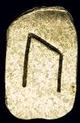
| The left rune represents the first possible outcome. Uruz symbolizes the Auroch, a member of the ox family that became extinct long ago. This rune represents the strength, bravery, and endurance of this animal of old. Uruz portends the ability to meet problems head on and to overcome them. When the world was new, warriors used to test their strength against the Auroch. Hence, this rune has come to represent the masculine principle and the capacity to meet a challenge. |
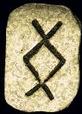
| The right rune represents the second possible outcome. Inguz is the rune of completion and fertility. The presence of this rune suggests that tasks which have been initiated will come to fruition. This rune is associated with Ing and Frey, it is this connection that explains its connotations of both fertility and sexuality. The variant of this rune shown here is reminiscent of the twin strands of life, and of the challenge and rewards of bringing together things complimentary. |
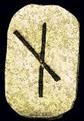
| The bottom rune represents the critical factor that determines what will come to pass. Nyd is frequently seen as a powerfully negative rune. You have drawn the rune reversed, which will lessen some of its effects. Generally Nyd represents loss, sorrow, and a hard journey with lessons learned. Nyd reversed here might be cautioning that the lessons might go unheeded representing repeated mistakes. The rune here might also be representing a minor loss or a nearly avoided catastrophe. Be careful, things are tricky and require strong attentiveness. |
|
|