Today's Runes for Theodore Roosevelt
| The Norn spread is used to plot the crucial elements of past, present, and future, and to reveal the evolution of the situation through the arc of time. Jade Runes are most commonly used for questions about love, friendship, and relationships. |
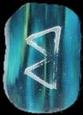
| The left rune represents an important element of the past. Berkana, the birch tree, is representative of rebirth, fertility, and a positive outcome to ventures undertaken. It is also the rune of families. Here the rune is reversed, warning you to be heedful of new beginnings, lest they sour. Rebirth is either delayed, or totally disrupted. There is also a warning of family troubles. |
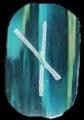
| The middle rune represents a deciding element of the present. Nyd is frequently seen as a powerfully negative rune. You have drawn the rune reversed, which will lessen some of its effects. Generally Nyd represents loss, sorrow, and a hard journey with lessons learned. Nyd reversed here might be cautioning that the lessons might go unheeded representing repeated mistakes. The rune here might also be representing a minor loss or a nearly avoided catastrophe. Be careful, things are tricky and require strong attentiveness. |
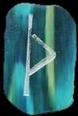
| The right rune represents the critical element of the future. Thurisaz represents a thorn, the most basic of barriers to our boon or our bane. In the case of hedges, thorns protect our encampments from that which skulks towards us from the outlands. In the case of rosebushes, thorns keep us from beauty. Though thorns are passive and have no thoughts, they puncture, tear, and may even be poisonous. Hence, this rune may also represent irrational violence and anger. |
|
|