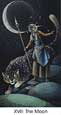
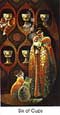
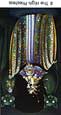
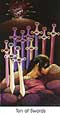
| The Celtic Cross spread is one of the most popular Tarot spreads, providing varied insight into many aspects of a complex situation and your role in it. The Cat People Tarot paints a picture of faraway lands trod by mystical archetypes and their feline companions. This deck is a perfect tool for dreamers and idealists, and is a great choice for divining the nature of human imagination. If you would like your own copy of the Cat People Tarot, you can buy it now! |
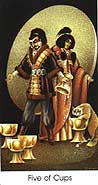 | The card not shown but at the center of the cross, represents the atmosphere surrounding the central issue. Five of Cups (Disappointment): Partial loss. Regret. Friendship without real meaning. Marriage without real love. Imperfection. Flaw. Delayed inheritance. Incomplete union or partnership. |
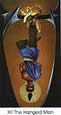
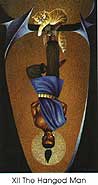 | The card visible at the center of the cross represents the obstacle that stands in your way - it may even be something that sounds good but is not actually to your benefit. The Hanged Man: Life in suspension. Transition. Change. Reversal of the mind and one's way of life. In a passive sense, apathy and dullness. Boredom. Abandonment. Renunciation. The change of life's forces. Event's of an uncertain nature. The period of respite between significant events. Sacrifice. Readjustment. Regeneration. Improvement. Rebirth. The approach of new life forces. Surrender. Lack of progress. Oversacrifice. An unappreciated person. |
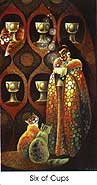 | The card at the top of the cross represents your goal, or the best you can achieve without a dramatic change of priorities. Six of Cups (Pleasure): Memories. Past influences. Things that have vanished. Childhood past. Nostalgia. Faded images. Longing. |
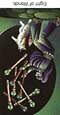
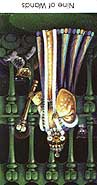 | The card at the bottom of the cross represents the foundation on which the situation is based. Nine of Wands (Strength), when reversed: Obstacles. Adversity. Problems. Delays. Barriers to overcome. Ill health. |
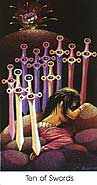 | The card at the left of the cross represents a passing influence or something to be released. Ten of Swords (Ruin): Ruin. Pain. Affliction. Sadness. Mental anguish. Desolation. Tears. Misfortune. Trouble. Disappointment. |
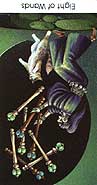 | The card at the right of the cross represents an approaching influence or something to be embraced. Eight of Wands (Swiftness), when reversed: Thorns of dispute. Jealousy. Harassment. Discord. Stagnation. Domestic quarrels. |
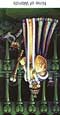
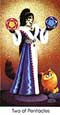
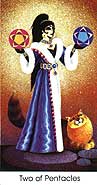 | The card at the base of the staff represents your role or attitude. Two of Pentacles (Change): Difficulty in launching new projects. Difficult situations arising. New troubles. Embarrassment. Worry. Concern. |
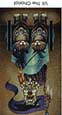
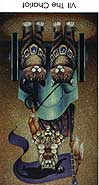 | The card second from the bottom of the staff represents your environment and the people you are interacting with. The Chariot, when reversed: To be unsuccessful. Defeat. Failure. At the last minute to lose something otherwise within grasp. Sudden collapse of plans. Vanquishment. |
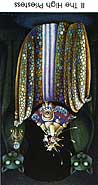 | The card second from the top of the staff represents your hopes, fears, or an unexpected element that will come into play. The High Priestess, when reversed: Ignorance. Shortsightedness. Lack of understanding. Selfishness. Acceptance of superficial knowledge. Improper judgment. Shallowness. |
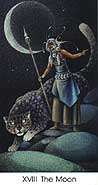 | The card at the top of the staff represents the ultimate outcome should you continue on this course. The Moon: Deception. Twilight. Obscurity. Trickery. Disillusionment. Danger. Error. caution. Warning. Ulterior motives. Insincerity. False friends. Selfishness. Double dealing. Craftiness. False pretenses. Disgrace. Slander. Liability. Superficiality. Unknown enemies. The meaning of many divergent influences. Falling into a trap. Being misled. |