| The Relationship spread provides insight into the interaction between two people or entities. It is the spread of choice for questions about partnerships, be they in romance or business. The Ator Tarot is a smart and whimsical spin on Rider Waite symbolism. The clunky and adorable characters of the Ator Tarot make it the deck of choice for those seeking a refreshing approach to divination. If you would like your own copy of the Ator Tarot, you can buy it now! |
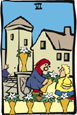
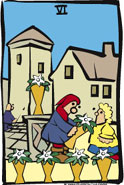 | The card at the top left represents how you see yourself. Six of Cups (Pleasure): Opening your heart to the simple pleasures of life. Fond memories fuel the playful embrace of love and life. Experiencing the joy of youth and sexual innocence. Engaging in acts of gentle kindness. Harmony of natural forces without effort or strain. Meeting an old friend. |
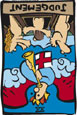
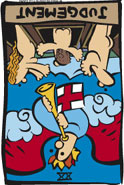 | The card at the top right represents how you see your partner. Judgement, when reversed: Procrastination and indecision. Disillusionment and the inability bring a matter to conclusion. |
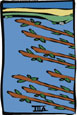
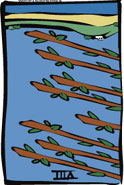 | The card in the center left represents how you feel about your partner. Eight of Wands (Swiftness), when reversed: Too much force applied too suddenly. A flash in the pan. A foolhardy and untimely plunge into the unknown. Impatience leading to poor decisions in love, business, travel, or spiritual growth. |
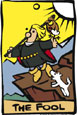
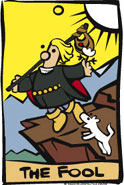 | The card in the center right represents what stands between you and your partner. The Fool: Fearlessness, imagination, open-mindedness, and an adventurous spirit. Freedom from cares and worries. Ideas, thoughts, and impulses coming from a completely unexpected place. Nonchalance at the threshold of gaining all or losing all. Extravagance and intoxication with life. The pure and undifferentiated power of creation itself, where ultimate knowledge and oblivion are unified. |
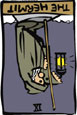
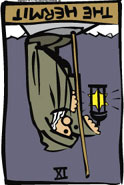 | The card in the lower left represents how your partner sees you. The Hermit, when reversed: Detachment based on fear, irresponsibility or naivet�. Self-imposed isolation from friends and loved ones. Listening to the wrong advice or ignoring good counsel. Concealment, disguise, and unreasoned caution. |
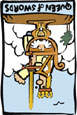
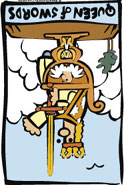 | The card in the lower right represents what your partner feels about you. Queen of Swords, when reversed: The dark essence of air behaving as water, such as a cold rain: A person gifted with both keen logic and natural intuition, giving them uncanny powers of perception and insight. One who easily sees the weakness in any argument, and savages friend and foe alike with biting sarcasm. Dry and vicious wit covering a hollow sense of isolation and dissatisfaction with life. |
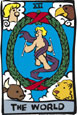
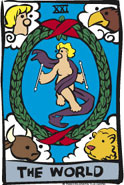 | The card in the center represents the present status or challenge of the relationship. The World: Completeness and intricacy of design. A great work. Achievement, reward, and well-earned recognition. A time of success, prosperity, security and joy. May also indicate travel or a change in residence. |