| The Shadow Truth spread provides insight into your attitudes and hidden feelings. This spread is used when you are having trouble confronting something, or fear that you are concealing something from yourself. The Russian Tarot of Saint Petersburg is the final commissioned work of Yuri Shakov, a master in the lost art of Russian miniature painting. The rich, dark images lend themselves to questions regarding the struggle of the human spirit in trying times. If you would like your own copy of the Russian Tarot of Saint Petersburg, you can buy it now! |
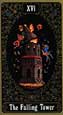
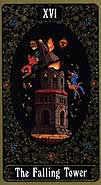 | The card in the center represents the attitude you assume. The Falling Tower: Complete and sudden change. Breakdown of old beliefs. Abandonment of past relationships. Severing of a friendship. Changing one's opinion. Unexpected events. Bankruptcy. Downfall. Loss of stability. Loss of security. |
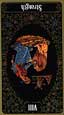
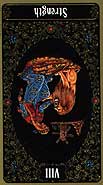 | The card to the right represents the thoughts and feelings that underly your attitudes. Strength, when reversed: Weakness. Pettiness. Impotence. Sickness. Lack of faith. Abuse of power. Succumbing to temptation. Indifference. |
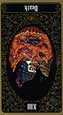
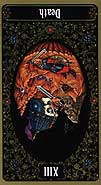 | The card at the top represents how your attitude is evolving and will evolve in the future. Death, when reversed: Stagnation. Immobility. Slow changes. Partial change. Inertia. Narrowly avoiding a serious accident. |
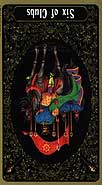 | The card to the left represents how others perceive your attitude. Six of Clubs (Victory), when reversed: Indefinite delay. Fear. Apprehension. Disloyalty. Superficial benefit. Inconclusive gain. |
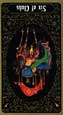
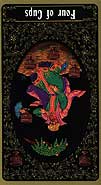 | The card at the bottom represents what you cannot confront or are hiding from yourself. Four of Cups (Luxury), when reversed: New possibilities. New relationships. New approaches to old problems. New knowledge. |