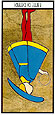
| The Hagall spread is a tool for revealing the path of spiritual growth in difficult situations. It is a favorite of mystics and those confronting a major life challenge. The Benedetti Tarot is a highly stylized deck painted on gold leaf. 7 years in the making, the images were inspired by the Visconti Tarot, the earliest Tarot deck still in existence. The Benedetti Tarot is the favorite deck of those who seek simplicity and elegance in their lives. |
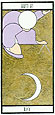
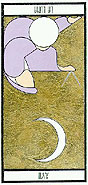 | The card in the middle of the circle represents the core or central issue of the situation. The Moon, when reversed: Clarity, control and peace in troublesome times. Increased psychic abilities. Temptations, small problems and minor setbacks overcome. The dawning of a new day. |
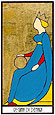
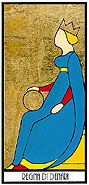 | The card at the bottom of the circle represents something you did to bring the situation about. Queen of Pentacles: The essence of earth behaving as water, such as a hot spring: A warm and generous host, providing shelter and comfort for all who would seek it. A person steadfast, practical, and domestic, able to create opulence and stability in any setting. The qualities of maturity and sensibility, coupled with an innate appreciation for nature and the material world. |
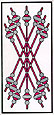
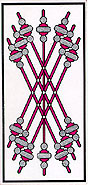 | The card at the bottom left of the circle represents your beliefs, impressions, or expectations. Seven of Wands (Valor): Standing courageously for your beliefs in the face of adversity. Fear of failure overcome by the will to succeed. Great obstacles met with heroism and determination. Inner strength brought to bear at a critical moment. |
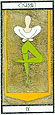
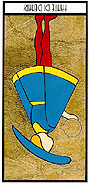
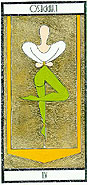 | The card at the bottom right of the circle represents the most likely outcome of the situation given present circumstances. The Hanged Man, when reversed: Life in suspension. Selfish, materialistic, and untrusting attitudes. Unwillingness to make necessary sacrifices. Going along with the crowd, and refusing to hear the inner voice. Concessions and appeasements that backfire. |
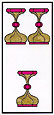
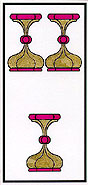 | The card at the upper left of the circle represents the spiritual history of the situation the things you've learned. Three of Cups (Abundance), when reversed: A time of shallow overindulgence, followed depletion. The successful but utterly unfulfilling conclusion of a matter. Satisfaction from sensual pleasures divorced from any sense of love. May indicate problems prematurely dismissed or a victory claimed before it is certain. |
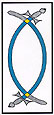
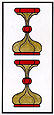
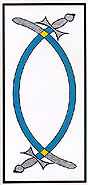 | The card at the top of the circle represents the spiritual tasks and challenges of the present situation. Two of Swords (Peace), when reversed: Indecision due to contradictory characteristics brought together. Tension in the aftermath of a quarrel that has been resolved. Scheming, abuse of trust, and agreements made in bad faith. Allowing the mind to block off the emotions. Self deception as a means of justifying cruel acts. |
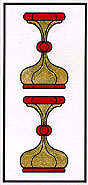 | The card at the upper right of the circle represents the metamorphosis of the spiritual situation, and how your knowledge will evolve. Two of Cups (Love), when reversed: Instability in romance, friendship, or business. A deep infatuation that excludes existing friends. A false promise or premature commitment. The entanglement of male and female interpreted in the broadest sense. The profaning of the sacred through the introduction of base desire. Folly, depletion, and waste. May suggest conflict, divorce, or a severing of ties. |
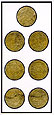
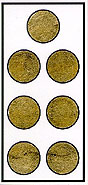 | The card at the left of the lower line represents the person or qualities that will sustain your spiritual journey. Seven of Pentacles (Assessment): A pause to check on the progress of your labors. Making difficult financial decisions. Exercising patience and perseverance. Evaluating the status of your work and your options for the future. |
 | The card in the middle of the lower line represents the qualities that you express in this circumstance. Page of Pentacles, when reversed: The dark essence of earth, such as a chasm: Unfavorable news about business, finance, or the physical world. One who delights in all forms of luxury and physical excess, leaving practical matters unattended. Irrationality and failure to recognize obvious facts, coupled with a poor work ethic. Wastefulness, lack of focus, and loss. May portend the loss of a job or promotion. |
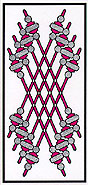 | The card at the right of the lower line represents the person or qualities that will reveal spiritual knowledge. Eight of Wands (Swiftness), when reversed: Too much force applied too suddenly. A flash in the pan. A foolhardy and untimely plunge into the unknown. Impatience leading to poor decisions in love, business, travel, or spiritual growth. |