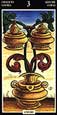
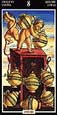
| The Celtic Cross spread is one of the most popular Tarot spreads, providing varied insight into many aspects of a complex situation and your role in it. The William Blake Tarot explores the mystical vision and artistry of the renowned English painter and poet. Through rich interpretations focused on creative undertakings, it has long been the deck of choice for artists, writers, musicians, and thinkers. For more information about this deck, or to buy your own personal copy, go to www.blaketarot.com.
|
 | The card not shown but at the center of the cross, represents the atmosphere surrounding the central issue. Child of Science: Searching for truth or knowledge. Figuring out a plan or stratagem. Questioning everything. Looking inside yourself for deeper information. Building on a classical or time-tested approach. A time for research and information-gathering. Skillful use of tools and technology. Curiosity. In the creative process: Doing feasibility studies or reorganizing your approach is favored now. Be curious and question everything. |
 | The card visible at the center of the cross represents the obstacle that stands in your way - it may even be something that sounds good but is not actually to your benefit. Forgiveness: A trial-and-error blend of creative solutions to a problem or complex issue. Keeping things in proportion and proper balance by making needed adjustments. Managing your time and resources carefully. Listening for inner guidance and tuning in to spiritual advice. Promoting forgiveness and healing, being compassionate toward those around you. |
 | The card at the top of the cross represents your goal, or the best you can achieve without a dramatic change of priorities. Two of Science (Reflection): Being at the threshold of something. A mental or reasoned choice to be made. Dilemma. Waiting for something to happen. A temporary balance of opposite natures. In the creative process: An uneasy decision about which way to proceed, perhaps between a rational versus intuitive approach. Weigh the potential rewards versus the possible dangers. |
 | The card at the bottom of the cross represents the foundation on which the situation is based. Five of Painting (Hardship): Tangible difficulties, insecurity, or financial worries. Possible material losses, pain, or illness. Accusations and criticism, or blame from others. Exclusion. Suffering. Issues of support, loyalty, or companionship in hard times. In the creative process: Realize that the problems you are trying to solve may put you at odds with others who do not recognize your value. Be ready to grapple with personal blocks and fears, and to hear more from your inner voice than reasons why things won't work. |
 | The card at the left of the cross represents a passing influence or something to be released. Ace of Painting (Generation): A tangible impetus to creative action. Generating new forms. Putting your plan into action. New projects and works. A provocative opening. Powerful elements of sensuality and sexuality coming into play. Focus on fertility and virility. In the creative process: This is when you tap into the elemental and generative forces of life, using your inner vision to create new and exciting forms with which to work. |
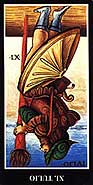
 | The card at the right of the cross represents an approaching influence or something to be embraced. Six of Science (Passage), when reversed: Going to undue lengths to avoid surmountable obstacles. Movement without progress. Challenges imposed or undertaken without purpose or meaning. The illusion that new terrain bears nothing in common with the old. Latent possibilities are occluded or confused. Opportunities are overlooked. In the creative process: Your imagination needs to be uncovered or unleashed by resolving contradictory elements and seeking spiritual guidance. |
 | The card at the base of the staff represents your role or attitude. Four of Poetry (Harmony), when reversed: Things refuse to come together. Achievements or personal successes go unrecognized. What was sown cannot be reaped. Discord among friends and family. Inability to working together with a partner or share a special experience. In the creative process: The various elements and personalities involved in your project are interacting harmoniously, generating an appropriate sense of gratitude for what has been accomplished so far. |
 | The card second from the bottom of the staff represents your environment and the people you are interacting with. Ten of Painting (Delight), when reversed: Your work or ideal takes on a life of it own, seeming to leave you behind. Financial prosperity leads you astray. Being distracted from your ideals by achievement or promotion on the job. Inheriting something at odds with your core values. Separation from family, traditions, and roots. In the creative process: The success of completion of your project is cause for celebration and an opportunity to honor all the gods and spirits that participated in your benefit. |
 | The card second from the top of the staff represents your hopes, fears, or an unexpected element that will come into play. Eight of Painting (Discipline): Proper pacing or management of your workload or time. Taking control of a difficult situation. Following the lead of a mentor or inner guide. A need for physical assessment and self-improvement. Seek appropriate education and training. Step-by-step progress. Diligence and perseverance. Tackling a mountain of work. In the creative process: Even though you may have a long way to go, a methodical approach incorporating guidance and training will ultimately lead you to the top. |
 | The card at the top of the staff represents the ultimate outcome should you continue on this course. Seven of Poetry (Boldness): "The times require that every one should speak out boldly: ...every man should do his duty, in Arts, as well as in Arms, or in the Senate". Standing up for yourself and your beliefs. Telling the truth despite everything. Tests of integrity, firmness, and commitment. Doing the right thing even though it hurts. Facing the envy or enmity of others. Proving yourself against rivals and competitors. Finding the courage to resist organized, institutional, or governmental oppression. In the creative process: Maintain your artistic tenacity and courage despite any criticism, disapproval, or influence of societal prejudices or market pressures. |