| The Celtic Cross spread is one of the most popular Tarot spreads, providing varied insight into many aspects of a complex situation and your role in it. The Haindl Tarot weaves a tapestry of haunting beauty from the traditions of Native America, the Holy Grail, the I Ching, Kabbalah and the Norse Runes, and is the deck of choice for mystics and those seeking enlightenment. If you would like your own copy of the Haindl Tarot, you can buy it now! |
 | The card not shown but at the center of the cross, represents the atmosphere surrounding the central issue. Father of Cups (Odin), when reversed: Father's power disrupted. |
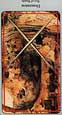
 | The card visible at the center of the cross represents the obstacle that stands in your way - it may even be something that sounds good but is not actually to your benefit. Father of Wands (Brahma), when reversed: Snobbishness, especially intellectual. Devotion Doubts, weakness, confusion. |
 | The card at the top of the cross represents your goal, or the best you can achieve without a dramatic change of priorities. The Hierophant: Tradition, community and teachings. Conformity. Marriage, or any solemn commitment. |
 | The card at the bottom of the cross represents the foundation on which the situation is based. Mother of Wands (Kali): A wild, female energy. Dark power, sexual energy. |
 | The card at the left of the cross represents a passing influence or something to be released. The Devil: Something exciting, possibly dangerous or forbidden. Temptation. Physical gratification. Exploring darker feelings. Wild action opens up new areas in life. |
 | The card at the right of the cross represents an approaching influence or something to be embraced. Father of Swords (Ra): Dominant, autocratic person. Delegating authority to others. Strong, creative intellect. Fairness. |
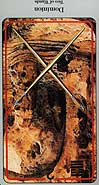 | The card at the base of the staff represents your role or attitude. Two of Wands (Dominion), when reversed: Voluntarily giving up a position of power. Seeking adventures. Misuse of power. |
 | The card second from the bottom of the staff represents your environment and the people you are interacting with. Six of Wands (Victory): Triumph. Confidence and firm action will lead to triumph. Inspiration. |
 | The card second from the top of the staff represents your hopes, fears, or an unexpected element that will come into play. Ten of Swords (Ruin): Pain, confusion. Personal difficulties. Problems. |
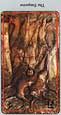
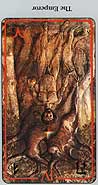 | The card at the top of the staff represents the ultimate outcome should you continue on this course. The Emperor, when reversed: Blocked possibility. Development of sensitivity. |