Today's Tarot for Ian McKellan
| The Shadow Truth spread provides insight into your attitudes and hidden feelings. This spread is used when you are having trouble confronting something, or fear that you are concealing something from yourself. The Palladini Tarot was created to "bridge the ancient and the future", using elements of Medieval, Egyptian and modern art. It is one of the most popular decks among new students of Tarot. If you would like your own copy of the Palladini Tarot, you can buy it now! |
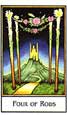
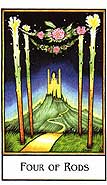 | The card in the center represents the attitude you assume. Four of Rods (Completion): A chance to rest and rejoice, having successfully resolved a matter of great import. The initial success of a business venture or creative project. The blossoming of a friendship or romantic relationship. Conclusions drawn based on hard won experience. Spiritual, material, or emotional rewards for diligent effort. May suggest marriage, childbirth, or a victory celebration. |
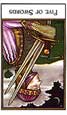
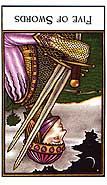 | The card to the right represents the thoughts and feelings that underly your attitudes. Five of Swords (Defeat), when reversed: Refusing to achieve success through personal degradation. Friendship maintained through the abandonment of a dishonorable gain. Slander and infamy avoided. |
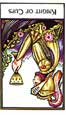
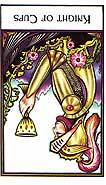 | The card at the top represents how your attitude is evolving and will evolve in the future. Knight of Cups, when reversed: The dark essence of water behaving as fire, such as a flash flood: Deceptive charm in the service of intense insecurity and rapidly shifting moods. Selfishness, indolence, and a complete lack of maturity. Misguided idealism divorced from practicality. Destructive romantic passions and infidelity. |
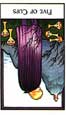
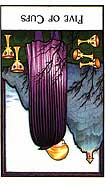 | The card to the left represents how others perceive your attitude. Five of Cups (Disappointment), when reversed: Accepting a loss. Overcoming sadness and grief to get on with your life. Realizing the value of what you still have. Dissatisfaction gives way to a new hope and understanding. May allude to a broken relationship or tragedy. May also refer to a gift, inheritance, opportunity, partnership, or marriage that has fallen below expectations. |
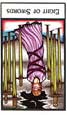
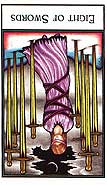 | The card at the bottom represents what you cannot confront or are hiding from yourself. Eight of Swords (Interference), when reversed: Learning a valuable lesson from the unexpected consequences of prior decisions. Narrowly escaping criticism, censure, and the imposition of external restrictions. Focusing on the crux of a problem and freeing oneself from a difficult situation. Coming to grips with a past failure or humiliation and moving on. |
|
|