Today's Tarot for Jim Henson
| The Cross and Triangle spread is a powerful means of understanding complex situations, developed by the Hermetic Order of the Golden Dawn. This spread is rich in occult and mystical symbolism, and one of our favorites here at Facade. The Phoenix Tarot is one of the most strikingly beautiful decks of the 20th century. Through vibrant colors and stylized images, it breathes new life into the familiar symbology of the Tarot. If you would like your own copy of the Phoenix Tarot, you can buy it now! |
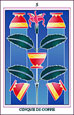
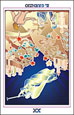
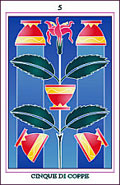 | The first card, the significator, is placed in the center of the cross. This card represents the prime energy manifest in your life. Five of Cups (Disappointment): Suffering a loss and wishing for what might have been. Being crippled by sadness, grief, and vain regret. Indecision brought on by the feeling that you made the wrong choice. Ignoring what you still have. May suggest a broken relationship or tragedy. May also suggest a gift, inheritance, opportunity, partnership, or marriage, but one that falls below expectations. |
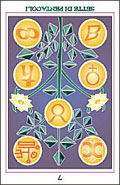 | The second card, placed above the significator, represents Air. It describes your spirit, process of thought, and the influence of reason. Seven of Pentacles (Assessment), when reversed: Labors abandoned before completion. Impatience, lack of effort, and the wasting of time. Idle and unprofitable speculation. |
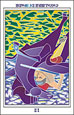
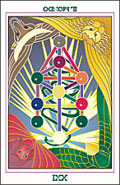 | The third card, placed to the right of the significator, represents Fire. It describes your motivations, creative energies, and the influence of passion. The World, when reversed: Incompleteness and shoddy design. A great work betrayed. Insecurity, fear of change, and the failure to reach goals. Regret and disappointment. |
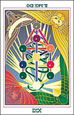
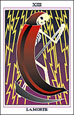
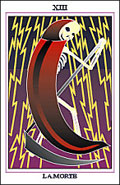 | The fourth card, placed below the significator, represents Water. It describes your emotions, meditations, and the influence of love. Death: A major change or transformation, possibly traumatic and unexpected. Freedom from the shackles of the past. A new beginning. Death coupled with rebirth, usually related to consciousness and lifestyle. |
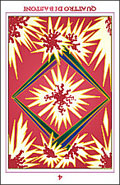 | The fifth card, placed to the left of the significator represents Earth. It describes your physical presence, position in life, and the influence of the material world. Four of Wands (Completion), when reversed: Squandering a great and hard won victory through decadence and laziness. Failing to reward those truly responsible for an achievement. Using past accomplishments as an excuse to ignore current problems. Abandoning the very qualities that brought about initial success. |
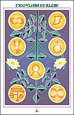
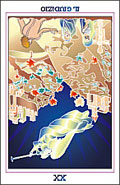 | At this point the cross is complete and the triangle is formed. The sixth card, placed on the bottom left of the triangle represents one of two opposing forces. Judgement, when reversed: Procrastination and indecision. Disillusionment and the inability bring a matter to conclusion. |
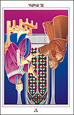
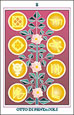
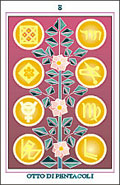 | The seventh card, placed on the bottom right of the triangle represents the force that opposes the bottom left card. These forces may be external, but they are frequently one's own inner archetypes in conflict. Eight of Pentacles (Prudence): Dedicating yourself fully to a task. Learning a new craft or skill. Applying painstaking attention to detail. Industriousness and the efficient completion of tasks. Sticking with a project long enough to see it through. |
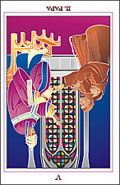 | The eighth card, the reconciler, is placed below the cross in the third vertex of the triangle. This is the force that will resolve the conflict between the bottom left and bottom right cards. By meditating on this force and bringing more of it into your life, you can bring the matter at hand to a swifter conclusion than would naturally occur. The Hierophant, when reversed: Authoritarianism. Inflexible and dogmatic thinking. A calcified old regime. Bad or incompetent advice. Inability to hear a higher or inner voice, or pretending to hear it for personal gain. |
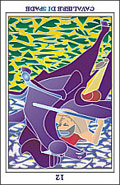 | The ninth and final card, placed in the center bottom of the triangle, represents the final outcome unless you change course. Knight of Swords, when reversed: The dark essence of air behaving as fire, such as a tornado: A merciless and skillful warrior, unfettered by emotion or conscience. A nihilist who can refuse not even the most insurmountable of challenges. A person who inspires fear and hate through their domineering nature and the power of their presence. Speaking without tact or tolerance, in a sarcastic manner. May portend the swift initiation or conclusion of conflict, through the calamitous invocation of force. |
|
|