Today's Tarot for Kelly Hu
| The Two Paths spread provides insight into an important decision ahead of you, the possible outcomes, and the forces that draw you towards each of these outcomes. The Curious Tarot is the rarest and most unusual of modern decks. The cards form a surreal collage of American consumer imagery, eerily capturing the archetypes of the atomic age. It is the deck of those who seek to harness the ancient tribal energy that courses through the modern urban world. There are only 100 Curious Tarot decks in existence - if you want one, buy it now!
|
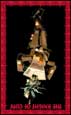
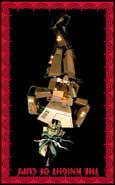 | The top left card represents the first possible outcome. Knight of Cups, when reversed: The dark essence of water behaving as fire, such as a flash flood: Deceptive charm in the service of intense insecurity and rapidly shifting moods. Selfishness, indolence, and a complete lack of maturity. Misguided idealism divorced from practicality. Destructive romantic passions and infidelity. |
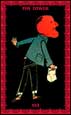
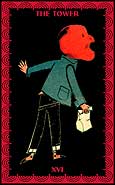 | The top right card represents the second possible outcome. The Tower: Unforeseen catastrophe. An abrupt change, perhaps leading to a new lifestyle and enlightenment. May indicate a broken relationship, divorce, or failure in business or career. |
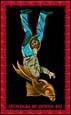
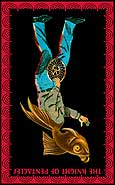 | The middle left card represents the force drawing you towards the first possible outcome. Knight of Pentacles, when reversed: The essence of earth behaving as fire, such as molten magma: One slow to action, even in the most urgent circumstances. A force of nature that cannot be diverted from the wrong path. The voice of duty and honor utterly divorced from reality. Lack of imagination and the complete unwillingness to try a different approach, even if the face of complete failure. Idleness and stagnation. |
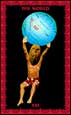
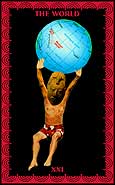 | The middle right card represents the force drawing you towards the second possible outcome. The World: Completeness and intricacy of design. A great work. Achievement, reward, and well-earned recognition. A time of success, prosperity, security and joy. May also indicate travel or a change in residence. |
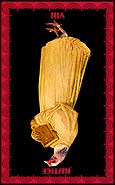 | The bottom card represents the critical factor that decides what will come to pass. Justice, when reversed: Lack of balance, harmony and integrity. The suspension of action until a decision is made. Lawsuits and prosecutions. Unjust decisions and the consequences of those decisions. A turn for the worse in legal matters. |
|
|