| The Celtic Cross spread is one of the most popular Tarot spreads, providing varied insight into many aspects of a complex situation and your role in it. The Rider Waite Tarot is the most widely recognized Tarot deck, and the first deck published in the 20th century. It was created by members of the Hermetic Order of the Golden Dawn, and is especially suited to questions of a mystical nature. If you would like your own copy of the Rider Waite Tarot, you can buy it now! |
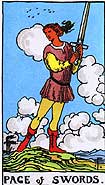 | The card not shown but at the center of the cross, represents the atmosphere surrounding the central issue. Page of Swords: The essence of air behaving as earth, such as a steady wind: The approach of an unexpected challenge, to be met with clear thought and just action. A person filled with an eager appetite for all matters of mind and logic. The gathering of information through unfaltering vigilance, careful examination, and subtle spycraft. The use of reason or eloquent speech to penetrate the veil of confusion and cut to the heart of the matter. |
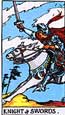
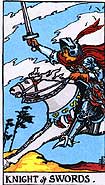 | The card visible at the center of the cross represents the obstacle that stands in your way - it may even be something that sounds good but is not actually to your benefit. Knight of Swords: The essence of air behaving as fire, such as a tornado: A fearless and skillful warrior, unfettered by emotion or material concerns. One able to boldly take on challenges that others consider terrifying or insurmountable. A person who inspires fear and awe through the purity of their purpose and the intensity of their intellect. Speaking frankly, in an outspoken manner, and with great influence. May portend the swift initiation or conclusion of a conflict, through the decisive invocation of force. |
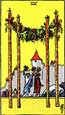
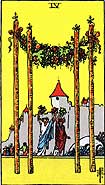 | The card at the top of the cross represents your goal, or the best you can achieve without a dramatic change of priorities. Four of Wands (Completion): A chance to rest and rejoice, having successfully resolved a matter of great import. The initial success of a business venture or creative project. The blossoming of a friendship or romantic relationship. Conclusions drawn based on hard won experience. Spiritual, material, or emotional rewards for diligent effort. May suggest marriage, childbirth, or a victory celebration. |
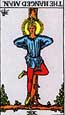
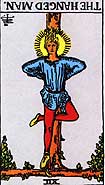 | The card at the bottom of the cross represents the foundation on which the situation is based. The Hanged Man, when reversed: Life in suspension. Selfish, materialistic, and untrusting attitudes. Unwillingness to make necessary sacrifices. Going along with the crowd, and refusing to hear the inner voice. Concessions and appeasements that backfire. |
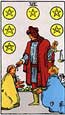
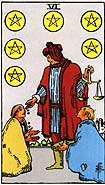 | The card at the left of the cross represents a passing influence or something to be released. Six of Pentacles (Success): A time of prosperity and profit. Success and generosity in material things. Power and influence turned to noble pursuits. Philanthropy, and the balancing of physical and spiritual life. May suggest gifts or aid to one in need. |
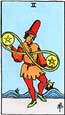
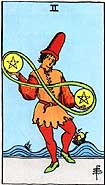 | The card at the right of the cross represents an approaching influence or something to be embraced. Two of Pentacles (Change): Balance and harmony achieved in a time of upheaval and transformation. Taking two steps forward for every one step back. Shifting the importance of projects and priorities to keep everything on track. A change in occupation or location. |
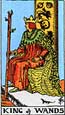
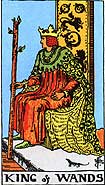 | The card at the base of the staff represents your role or attitude. King of Wands: The essence of fire behaving as air, such as lightning: A great and daring leader who inspires others to rise to challenges alongside him. An artist who can take hold of an idea and make it a reality through bold action. One who is forceful, charismatic, and honest, leading by example, but unafraid to invest authority in others. A dashing and magnetic personality, carrying authority naturally, and striking at the world with swiftness and grace. |
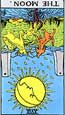
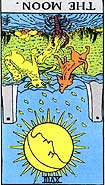 | The card second from the bottom of the staff represents your environment and the people you are interacting with. The Moon, when reversed: Clarity, control and peace in troublesome times. Increased psychic abilities. Temptations, small problems and minor setbacks overcome. The dawning of a new day. |
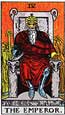
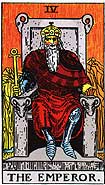 | The card second from the top of the staff represents your hopes, fears, or an unexpected element that will come into play. The Emperor: Worldly authority and power. Social mastery and oratory. One who is intelligent, experienced, confident and reasonable. A patriarch or primary male influence. The motive force of politics and society. The ability to fulfill plans and use mental control over the emotions. |
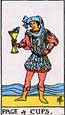
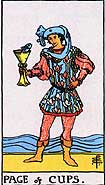 | The card at the top of the staff represents the ultimate outcome should you continue on this course. Page of Cups: The essence of water behaving as earth, such as a wellspring: An unexpected new relationship that is playful and spontaneous. A romantic soul who embraces compassion and imagination with childlike joy. Gentle reflections on love, spirituality, and the importance of personal relationships in business and material affairs. May herald the birth of a child. |