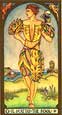
| The Celtic Cross spread is one of the most popular Tarot spreads, providing varied insight into many aspects of a complex situation and your role in it. The Renaissance Tarot is a modern deck, with symbolism drawn from the heroic age and rendered in renaissance style. This deck is an excellent choice for exploring questions of passion, mastery, and the inner workings of human reason. If you would like your own copy of the Renaissance Tarot, you can buy it now! |
 | The card not shown but at the center of the cross, represents the atmosphere surrounding the central issue. The Star, when reversed: Fleeting peace. Melancholy. Pensiveness. |
 | The card visible at the center of the cross represents the obstacle that stands in your way - it may even be something that sounds good but is not actually to your benefit. Eight of Staves (Swiftness), when reversed: Bewilderment. Awe. Temporary immobility. |
 | The card at the top of the cross represents your goal, or the best you can achieve without a dramatic change of priorities. The High Priestess: The abstract, spiritual and intellectual face of the anima, which is the feminine nature of the soul. Primordial feminine wisdom. The cyclic and balancing forces of nature. The ancient underground tradition of healing arts, magic, and spiritual mystery. |
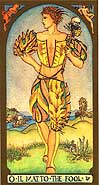 | The card at the bottom of the cross represents the foundation on which the situation is based. The Fool: The personality in the primal state, the willful child in all of us. Instinct. Innocence. Impulsive actions. Setting off in a new direction in life. Liberation of the impulses. Insight and wit from instinct rather than instruction. |
 | The card at the left of the cross represents a passing influence or something to be released. Death, when reversed: Death averted. Brush with danger. Rising from a deathlike sleep. |
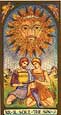
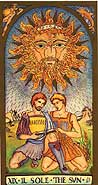 | The card at the right of the cross represents an approaching influence or something to be embraced. The Sun: Glory and rejoicing. The light of reason. The flower of manhood. Inspiration in poetry and music. |
 | The card at the base of the staff represents your role or attitude. Justice: The vindication of the just and the punishment of the unjust. Rule of reason. Balance of power. |
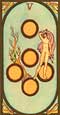
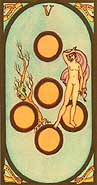 | The card second from the bottom of the staff represents your environment and the people you are interacting with. Five of Coins (Worry): Impoverishment and barrenness. Yearning for one absent. |
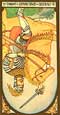
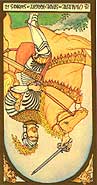 | The card second from the top of the staff represents your hopes, fears, or an unexpected element that will come into play. Knight of Swords, when reversed: Opinionated person who is too quick to condemn others. Bigotry. Action without forethought. |
 | The card at the top of the staff represents the ultimate outcome should you continue on this course. The Hermit: Introspection. Retreat. Pilgrimage. Spiritual quest. The search in oneself and in the world for the "Honest Man" of Diogenes the philosopher. Meditation on the passage of time and the dissolution of matter. |