| The Celtic Cross spread is one of the most popular Tarot spreads, providing varied insight into many aspects of a complex situation and your role in it. The Voodoo Tarot of New Orleans is a deck rich in primal spirituality. It draws on images from the religion Santeria, which weaves Catholic and African beliefs into a vibrant tapestry. This exceptional deck is most often used to ask questions regarding the joy, fury, and spirituality in everyday life. If you would like your own copy of the Voodoo Tarot of New Orleans, you can buy it now! |
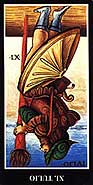
 | The card not shown but at the center of the cross, represents the atmosphere surrounding the central issue. Couche (The Hermit): Withdrawal from events and relationship to introspect and gather strength. Seeking the inner voice or calling upon vision from within. A need of understanding and advice, or a wise man who will offer knowing guidance. Personal experience and thoughtful temperance. |
 | The card visible at the center of the cross represents the obstacle that stands in your way - it may even be something that sounds good but is not actually to your benefit. Yemaya (Nine of Discs): Good luck attending material affairs. Attaining refinement and embracing elegance. Discipline and nobility applied to the maintenance of security and stability. The wise use of resources and foresight. The fulfillment that comes with accomplishment, and the turning of attention to higher things. |
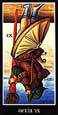
 | The card at the top of the cross represents your goal, or the best you can achieve without a dramatic change of priorities. Marassa (The Lovers), when reversed: Inner strife, frustration, suspicion, and disagreements in a relationship. Irresponsibility and indecision. Avoiding true intimacy in favor of lust. Unfaithfulness. |
 | The card at the bottom of the cross represents the foundation on which the situation is based. Master of the Head (The Heirophant): Faith in tradition and the old school. A justified and ancient source of power. Being supportive, sympathetic and loyal. Receiving instructions, learning, guidance or inspiration. The ability to hear a higher or inner voice. May also indicate a religious ritual, such as a marriage or an initiation. |
 | The card at the left of the cross represents a passing influence or something to be released. Ogoun Bhalin'dio (Five of Cups), when reversed: Accepting a loss. Overcoming sadness and grief to get on with your life. Realizing the value of what you still have. Dissatisfaction gives way to a new hope and understanding. May allude to a broken relationship or tragedy. May also refer to a gift, inheritance, opportunity, partnership, or marriage that has fallen below expectations. |
 | The card at the right of the cross represents an approaching influence or something to be embraced. Manman Brigitte (Three of Cups): A time of merriment and reflection spent in the company of friends and loved ones. The conclusion of a matter in plenty and perfection. The strength of a diverse community being brought together. May suggest a celebration, festival, anniversary, wedding, baby shower, or other joyous gathering. |
 | The card at the base of the staff represents your role or attitude. Legba La Flambeau (Six of Wands), when reversed: Arrogance and dangerous overconfidence as the result of a past success. Impudence and false pride in meaningless achievements. Fear of failure coupled with false hopes. Frustration over indefinite delays and motion without progress. |
 | The card second from the bottom of the staff represents your environment and the people you are interacting with. Petro Mambo (Queen of Wands), when reversed: The dark essence of fire behaving as water, such as steam: The natural embodiment of passion and sensuality, who will do anything to the be the center of attention. A seducer who calculatingly dons the guise of what others desire. A cocky and domineering person, who pushes anyone or anything aside to get what she wants. One who is vengeful and quick to take offense without good cause. May indicate infidelity and contempt for a relationship. |
 | The card second from the top of the staff represents your hopes, fears, or an unexpected element that will come into play. Azaka (Ten of Swords): Crushing defeat brought about by idle intellectualism divorced from reality. Sadness and desolation in the aftermath of a catastrophic and total collapse. A decisive conclusion brought about through the swift and merciless application of overwhelming force. |
 | The card at the top of the staff represents the ultimate outcome should you continue on this course. La Baleine (Four of Cups), when reversed: New and unusual relationships and opportunities. The reawakening of your appetite for life or love. The path of excess leading to spiritual rejuvenation and the appearance of novel ambitions. |