| The Hagall spread is a tool for revealing the path of spiritual growth in difficult situations. It is a favorite of mystics and those confronting a major life challenge. The International Icon Tarot renders traditional occult symbolism in Swiss iconography. It is a humorous and direct approach to divination, and one of our favorite new decks. If you would like your own copy of the International Icon Tarot, you can buy it now!
|
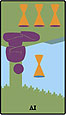
 | The card in the middle of the circle represents the core or central issue of the situation. Ten of Swords (Ruin), when reversed: The darkness before the dawn. An end to suffering, leading to spiritual transformation. A crushing and seemingly total defeat that hides within it the seeds of final victory. Ultimate knowledge gained through ultimate sacrifice. |
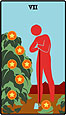
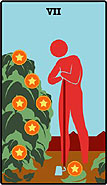 | The card at the bottom of the circle represents something you did to bring the situation about. Seven of Pentacles (Assessment): A pause to check on the progress of your labors. Making difficult financial decisions. Exercising patience and perseverance. Evaluating the status of your work and your options for the future. |
 | The card at the bottom left of the circle represents your beliefs, impressions, or expectations. Four of Swords (Truce), when reversed: Restlessness and mental disharmony. Deserting a struggle in progress. A temporary retreat from stress that turns into a permanent rout. A lack of vigilance that could lead to disaster. |
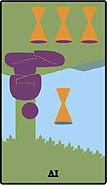 | The card at the bottom right of the circle represents the most likely outcome of the situation given present circumstances. Four of Cups (Luxury), when reversed: New and unusual relationships and opportunities. The reawakening of your appetite for life or love. The path of excess leading to spiritual rejuvenation and the appearance of novel ambitions. |
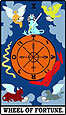
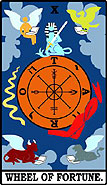 | The card at the upper left of the circle represents the spiritual history of the situation the things you've learned. Wheel of Fortune: The path of destiny. Karma on a grand scale. An unexpected turn of good fortune. A link in the chain of events. Success, luck, and happiness. |
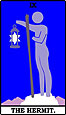
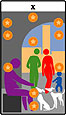
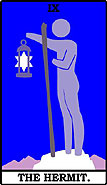 | The card at the top of the circle represents the spiritual tasks and challenges of the present situation. The Hermit: Withdrawal from events and relationship to introspect and gather strength. Seeking the inner voice or calling upon vision from within. A need of understanding and advice, or a wise man who will offer knowing guidance. Personal experience and thoughtful temperance. |
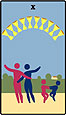
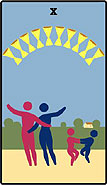 | The card at the upper right of the circle represents the metamorphosis of the spiritual situation, and how your knowledge will evolve. Ten of Cups (Satiety): Fulfillment and joy in life and love. Feeling peace, tranquility, and contentment in friends and family. Taking delight in one's good fortune. |
 | The card at the left of the lower line represents the person or qualities that will sustain your spiritual journey. King of Pentacles, when reversed: The dark essence of earth behaving as air, such as a diamond: An unyielding businessman, with a gift for identifying weakness and exploiting it for personal gain. One well informed about material affairs, but ignorant of larger, more pressing issues. A blind devotee of business as usual, unconcerned with the unintended results, and contemptuous of new ideas. A person full of greed and avarice, easily corrupted by luxury or the temptations of the flesh. |
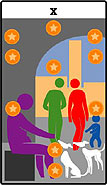 | The card in the middle of the lower line represents the qualities that you express in this circumstance. Ten of Pentacles (Wealth): Completion of material prosperity and riches. Freedom from financial anxiety, the security of home, and the enjoyment of family. The passing of inheritance along to children, or the gaining of inheritance from parents. |
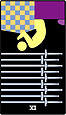
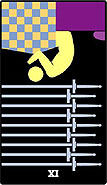 | The card at the right of the lower line represents the person or qualities that will reveal spiritual knowledge. Nine of Swords (Cruelty), when reversed: Mental anguish or ill health endured and overcome. Refusal to be dragged down by the dishonor of others. Attempting to avert a shameful or regrettable act. Faithfulness, patience and unselfishness. May indicate the narrow avoidance of a death or other catastrophic loss. |