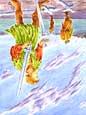
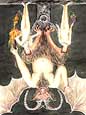
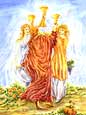
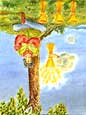
| The Celtic Cross spread is one of the most popular Tarot spreads, providing varied insight into many aspects of a complex situation and your role in it. The Aquatic Tarot is a modern watercolor interpretation of the classic Rider Waite symbolism. It is rapidly becoming one of the most popular decks, due to both its spectacular beauty and its traditional imagery. |
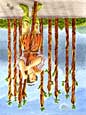
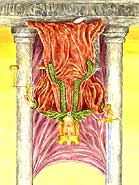 | The card not shown but at the center of the cross, represents the atmosphere surrounding the central issue. Justice, when reversed: Lack of balance, harmony and integrity. The suspension of action until a decision is made. Lawsuits and prosecutions. Unjust decisions and the consequences of those decisions. A turn for the worse in legal matters. |
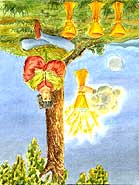 | The card visible at the center of the cross represents the obstacle that stands in your way - it may even be something that sounds good but is not actually to your benefit. Four of Cups (Luxury), when reversed: New and unusual relationships and opportunities. The reawakening of your appetite for life or love. The path of excess leading to spiritual rejuvenation and the appearance of novel ambitions. |
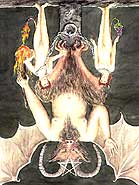 | The card at the top of the cross represents your goal, or the best you can achieve without a dramatic change of priorities. The Devil, when reversed: Resistance of temptation. Freedom from bondage. The pursuit of higher goals despite the influence of luxury and pleasure. Release from obsession with money and power. Liberation from fear, weakness and indecision through communion with higher powers or the inner voice. |
 | The card at the bottom of the cross represents the foundation on which the situation is based. King of Pentacles, when reversed: The dark essence of earth behaving as air, such as a diamond: An unyielding businessman, with a gift for identifying weakness and exploiting it for personal gain. One well informed about material affairs, but ignorant of larger, more pressing issues. A blind devotee of business as usual, unconcerned with the unintended results, and contemptuous of new ideas. A person full of greed and avarice, easily corrupted by luxury or the temptations of the flesh. |
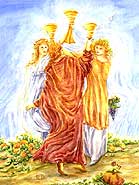 | The card at the left of the cross represents a passing influence or something to be released. Three of Cups (Abundance): A time of merriment and reflection spent in the company of friends and loved ones. The conclusion of a matter in plenty and perfection. The strength of a diverse community being brought together. May suggest a celebration, festival, anniversary, wedding, baby shower, or other joyous gathering. |
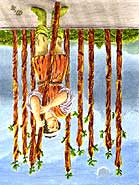 | The card at the right of the cross represents an approaching influence or something to be embraced. Nine of Wands (Strength), when reversed: Delayed preparations for an impending trial. Efforts compromised by traitors or saboteurs. The scattering of forces before the conclusive battle is fought. Ill health and faltering of the will. |
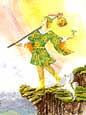
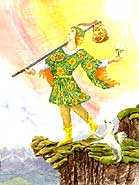 | The card at the base of the staff represents your role or attitude. The Fool: Fearlessness, imagination, open-mindedness, and an adventurous spirit. Freedom from cares and worries. Ideas, thoughts, and impulses coming from a completely unexpected place. Nonchalance at the threshold of gaining all or losing all. Extravagance and intoxication with life. The pure and undifferentiated power of creation itself, where ultimate knowledge and oblivion are unified. |
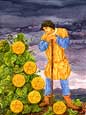
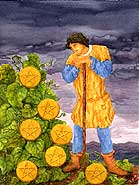 | The card second from the bottom of the staff represents your environment and the people you are interacting with. Seven of Pentacles (Assessment): A pause to check on the progress of your labors. Making difficult financial decisions. Exercising patience and perseverance. Evaluating the status of your work and your options for the future. |
 | The card second from the top of the staff represents your hopes, fears, or an unexpected element that will come into play. Temperance, when reversed: Lack of restraint and self-control. Losing one's cool. Energies dispersed through conflicts in personal, business, and spiritual matters. |
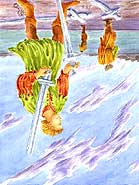 | The card at the top of the staff represents the ultimate outcome should you continue on this course. Five of Swords (Defeat), when reversed: Refusing to achieve success through personal degradation. Friendship maintained through the abandonment of a dishonorable gain. Slander and infamy avoided. |