Today's Tarot for Salvador Dali
| The Cross and Triangle spread is a powerful means of understanding complex situations, developed by the Hermetic Order of the Golden Dawn. This spread is rich in occult and mystical symbolism, and one of our favorites here at Facade. The Voodoo Tarot of New Orleans is a deck rich in primal spirituality. It draws on images from the religion Santeria, which weaves Catholic and African beliefs into a vibrant tapestry. This exceptional deck is most often used to ask questions regarding the joy, fury, and spirituality in everyday life. If you would like your own copy of the Voodoo Tarot of New Orleans, you can buy it now! |
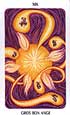
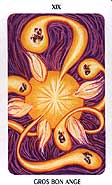 | The first card, the significator, is placed in the center of the cross. This card represents the prime energy manifest in your life. Gros Bon Ange (The Sun): A time of contentment and freedom from restraints. Creative inspiration. Achievement, success, and warmth. Light and love in personal or business matters. Happiness and faithfulness in a relationship. |
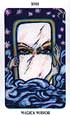
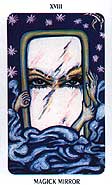 | The second card, placed above the significator, represents Air. It describes your spirit, process of thought, and the influence of reason. Magick Mirror (The Moon): Cyclic transformation covering the mysterious forces of the night. Feminine beauty and the intoxicating vitality of youth. The metamorphosis from beauty to beast and vice versa. Occult forces, sensitivities and intense dreams. Dangerous situations and perilous times. |
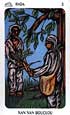
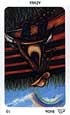
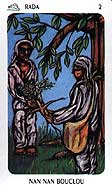 | The third card, placed to the right of the significator, represents Fire. It describes your motivations, creative energies, and the influence of passion. Nan Nan Bouclou (Two of Swords): Contradictory characteristics brought together as a means of resolving a conflict. Refusing to be ruled by negative emotions. Strife brought to a close through clarity of mind and restraint of force. Turning a blind eye to the minor infractions of others. |
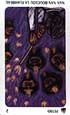
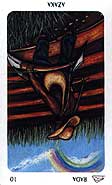 | The fourth card, placed below the significator, represents Water. It describes your emotions, meditations, and the influence of love. Azaka (Ten of Swords), when reversed: The darkness before the dawn. An end to suffering, leading to spiritual transformation. A crushing and seemingly total defeat that hides within it the seeds of final victory. Ultimate knowledge gained through ultimate sacrifice. |
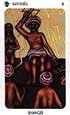
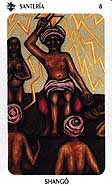 | The fifth card, placed to the left of the significator represents Earth. It describes your physical presence, position in life, and the influence of the material world. Shango (Eight of Discs): Dedicating yourself fully to a task. Learning a new craft or skill. Applying painstaking attention to detail. Industriousness and the efficient completion of tasks. Sticking with a project long enough to see it through. |
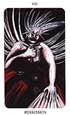
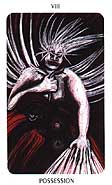 | At this point the cross is complete and the triangle is formed. The sixth card, placed on the bottom left of the triangle represents one of two opposing forces. Possession (Strength): Raw power. Health and physical fortitude. A surge of tremendous force. Recovery from sickness. Victory after apprehension and fear. The ability to face and overcome opposition brings the inner qualities of strength and forbearance. Delays and setbacks will be overcome. |
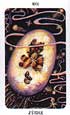
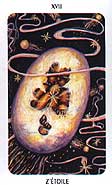 | The seventh card, placed on the bottom right of the triangle represents the force that opposes the bottom left card. These forces may be external, but they are frequently one's own inner archetypes in conflict. Z'Etoile (The Star): New hopes and splendid revelations of the future. Insight, inspiration, courage and enlightenment of the spiritual self. Body and mind and converging towards the light at the end of a dark time. |
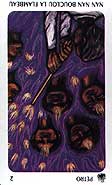 | The eighth card, the reconciler, is placed below the cross in the third vertex of the triangle. This is the force that will resolve the conflict between the bottom left and bottom right cards. By meditating on this force and bringing more of it into your life, you can bring the matter at hand to a swifter conclusion than would naturally occur. Nan Nan Bouclou La Flambeau (Two of Wands), when reversed: The erosion of power and influence. Failing to articulate goals or establish a vision for the future. Being caught off guard, due to an inability to come to grips with the impact of past decisions. Obstinate and irresponsible leadership. Loss of interest, clarity, or faith in a venture. |
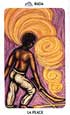
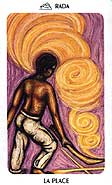 | The ninth and final card, placed in the center bottom of the triangle, represents the final outcome unless you change course. Rada La Place (Knight of Swords): The essence of air behaving as fire, such as a tornado: A fearless and skillful warrior, unfettered by emotion or material concerns. One able to boldly take on challenges that others consider terrifying or insurmountable. A person who inspires fear and awe through the purity of their purpose and the intensity of their intellect. Speaking frankly, in an outspoken manner, and with great influence. May portend the swift initiation or conclusion of a conflict, through the decisive invocation of force. |
|
|