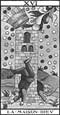
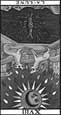
| The Hagall spread is a tool for revealing the path of spiritual growth in difficult situations. It is a favorite of mystics and those confronting a major life challenge. The Marseilles Tarot is an 18th century creation of obscure origins. It predates the occult symbolism of the Rider Waite deck by roughly 200 years, giving the readings a unique and rustic flavor. Many swear by this deck as the true oracle of the common man. If you would like your own copy of the Marseilles Tarot, you can buy it now! |
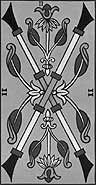 | The card in the middle of the circle represents the core or central issue of the situation. Two of Batons (Dominion), when reversed: The erosion of power and influence. Failing to articulate goals or establish a vision for the future. Being caught off guard, due to an inability to come to grips with the impact of past decisions. Obstinate and irresponsible leadership. Loss of interest, clarity, or faith in a venture. |
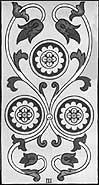 | The card at the bottom of the circle represents something you did to bring the situation about. Three of Coins (Works): The commencement of business, commercial transactions, or employment. The constructive use of creative talents, and the expression of artistry in workmanship. Skill and labor turned to the crafting of things of value. Using the conventional as a medium for expressing the exceptional, in order to build something of great renown and glory. |
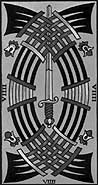 | The card at the bottom left of the circle represents your beliefs, impressions, or expectations. Nine of Swords (Cruelty): Debilitating mental anguish or ill health. Being dragged down by the dishonor of others. Participation in a shameful or regrettable act. Inescapable guilt, mistrust, and doubt. May indicate a death or other catastrophic loss. |
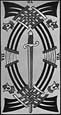
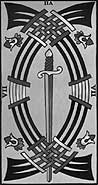 | The card at the bottom right of the circle represents the most likely outcome of the situation given present circumstances. Seven of Swords (Futility), when reversed: Being trapped in a hopeless situation and unable to withdraw. A feat of daring that is too much for you to handle. Being caught in the middle of a desperate act of cunning or outright deception. |
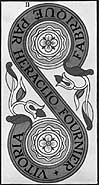 | The card at the upper left of the circle represents the spiritual history of the situation the things you've learned. Two of Coins (Change), when reversed: Imbalance and disharmony as a result of upheaval and transformation. Taking one step forward for every two steps back. Chaos caused by the shifting importance of projects and priorities. Industrious yet unreliable actions. Furious activity producing negligible results. |
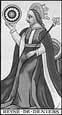
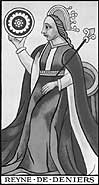 | The card at the top of the circle represents the spiritual tasks and challenges of the present situation. Reyne de Deniers (Queen of Coins): The essence of earth behaving as water, such as a hot spring: A warm and generous host, providing shelter and comfort for all who would seek it. A person steadfast, practical, and domestic, able to create opulence and stability in any setting. The qualities of maturity and sensibility, coupled with an innate appreciation for nature and the material world. |
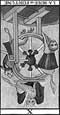
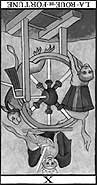 | The card at the upper right of the circle represents the metamorphosis of the spiritual situation, and how your knowledge will evolve. La Roue de Fortune (Wheel of Fortune), when reversed: An unexpected turn of bad luck. A broken sequence of events. Outside influences for the worse. An inescapable descent due to Fate or Karma. Great changes taking place as a result of earlier actions that cannot be taken back. Misfortune, failure and reluctance to use free will. |
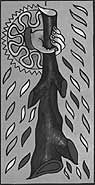 | The card at the left of the lower line represents the person or qualities that will sustain your spiritual journey. Ace of Batons, when reversed: The seed of a new crisis - perhaps as yet unseen. The start of an explosive situation threatening to consume all who get too close. The herald of birth, invention, or upheaval. An innate and primal force unleashed. May suggest a surge of vitality, creativity, or fertility that can set dangerous events in motion. |
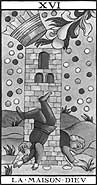 | The card in the middle of the lower line represents the qualities that you express in this circumstance. La Maison Diev (The Tower): Unforeseen catastrophe. An abrupt change, perhaps leading to a new lifestyle and enlightenment. May indicate a broken relationship, divorce, or failure in business or career. |
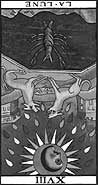 | The card at the right of the lower line represents the person or qualities that will reveal spiritual knowledge. La Lune (The Moon), when reversed: Clarity, control and peace in troublesome times. Increased psychic abilities. Temptations, small problems and minor setbacks overcome. The dawning of a new day. |