| The Relationship spread provides insight into the interaction between two people or entities. It is the spread of choice for questions about partnerships, be they in romance or business. The Haindl Tarot weaves a tapestry of haunting beauty from the traditions of Native America, the Holy Grail, the I Ching, Kabbalah and the Norse Runes, and is the deck of choice for mystics and those seeking enlightenment. If you would like your own copy of the Haindl Tarot, you can buy it now! |
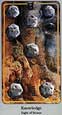
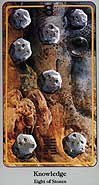 | The card at the top left represents how you see yourself. Eight of Stones (Knowledge): Be careful and moderate. Avoid excessive action. |
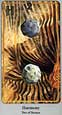
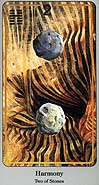 | The card at the top right represents how you see your partner. Two of Stones (Harmony): Harmonic situations. |
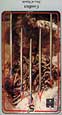
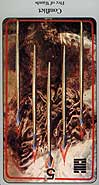 | The card in the center left represents how you feel about your partner. Five of Wands (Conflict), when reversed: Personal and aggressive conflicts. Bitterness towards others. |
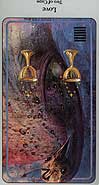 | The card in the center right represents what stands between you and your partner. Two of Cups (Love), when reversed: Quarreling or jealousy. Uncertain future. Lack of commitment. |
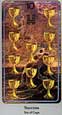
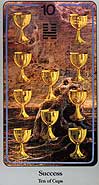 | The card in the lower left represents how your partner sees you. Ten of Cups (Success): Successful development, with some effort required. |
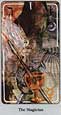
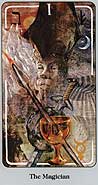 | The card in the lower right represents what your partner feels about you. The Magician: Power. Strength. Being in control of one's life. Transforming old situations, bringing in new ones. A burst of energy. Creativity. Focused will. |
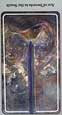
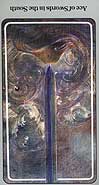 | The card in the center represents the present status or challenge of the relationship. Ace of Swords, when reversed: Anger. Aggression. Distorted thinking. |