| The Fourfold Vision spread offers a progression of different ways of looking at an object, person, or situation. It is a powerful tool for gaining deeper insight into the specific subjects of other readings. The Haindl Tarot weaves a tapestry of haunting beauty from the traditions of Native America, the Holy Grail, the I Ching, Kabbalah and the Norse Runes, and is the deck of choice for mystics and those seeking enlightenment. If you would like your own copy of the Haindl Tarot, you can buy it now! |
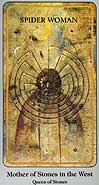 | The card on the far right represents the object being viewed, be it an idea, relationship, or the self. Mother of Stones (Spider Woman): Serene, probably an older woman. Self-confidence. |
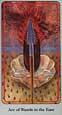
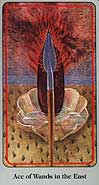 | The card second from the right represents the physical vision: how the object is seen at a base or mechanical level. Ace of Wands: Gift of fire. Energy. Optimism. Confidence. Desire. Beginnings. |
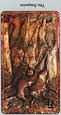
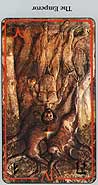 | The card in the middle represents the mental vision: the object personified and seen through a humanized perspective. The Emperor, when reversed: Blocked possibility. Development of sensitivity. |
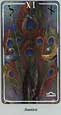
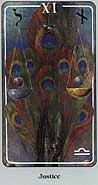 | The card second from the left represents the emotional vision: how passions and values are creatively stimulated by the mental vision. Justice: Examine your life, weigh things in the balance. A relationship is going badly. Analysis. Take a balanced view. |
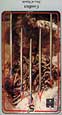
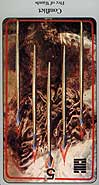 | The card on the far left represents the fourfold or mystical vision: still viewing through the previous three, we now add a spiritual element, revealing unseen aspects of the object. Five of Wands (Conflict), when reversed: Personal and aggressive conflicts. Bitterness towards others. |