Today's Runes for Elisha Cuthbert
| The Diamond spread reveals the dynamic forces at work in a situation. It is the spread of choice for understanding a hidden conflict. Stone Runes are most commonly used for questions about the natural world and things beyond human control. |
| The bottom rune represents the foundation that forms the basis of the issue. Berkana, the birch tree, is representative of rebirth, fertility, and a positive outcome to ventures undertaken. It is also the rune of families. Here the rune is reversed, warning you to be heedful of new beginnings, lest they sour. Rebirth is either delayed, or totally disrupted. There is also a warning of family troubles. |
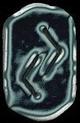
| The left rune represents one of the forces acting on the issue at hand. Eoh refers to the Yew tree. The Yew does not go dormant and therefore represents endurance. Even the wood of the tree is strong, resilient, and pliable - the Yew bends, but does not break. The evergreen nature of the Yew is present even in the rune itself, as it cannot be changed even by reversal. This rune is historically symbolic of death, but, as in the Tarot and as suggested by the nature of the Yew tree itself, death is seen only as a transmutation of something eternal and unchanging - the spirit. |
| The right rune represents another of the forces acting on the issue at hand. Thurisaz the thorn represents barriers and senseless violence. Here we see the thorn overturned. This could mean that erected barriers will not hold, or that senseless violence can be avoided. Also, remember where thorns are found - perhaps this rune portends that a goal can be obtained easily and without interference. Grasp for the rose... |
| The top rune represents the conclusion to which your strivings can carry you. Wunjo is the rune of joy. The reversal of this rune suggests that joy is withheld. Since joy is frequently communal, this rune often suggests loneliness. Alternatively, some have seen Wunjo as the rune of perfection and the rune of the gods. Therefore this rune reversed could signal a feeling of separation from one's deity, or as imperfection in an important work. |
|
|