Today's Runes for Erwin Schroedinger
| The Norn spread is used to plot the crucial elements of past, present, and future, and to reveal the evolution of the situation through the arc of time. Jade Runes are most commonly used for questions about love, friendship, and relationships. |
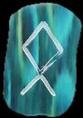
| The left rune represents an important element of the past. Othila is the homeland. Land was the purest form of immovable wealth in Norse civilization, distinct from the movable wealth represented by Fehu. This rune speaks of stability and safety stemming from inheritance, both material and genetic. With respect to the question asked, consider the background of the people and families involved... |
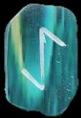
| The middle rune represents a deciding element of the present. Eoh refers to the Yew tree. The Yew does not go dormant and therefore represents endurance. Even the wood of the tree is strong, resilient, and pliable - the Yew bends, but does not break. The evergreen nature of the Yew is present even in the rune itself, as it cannot be changed even by reversal. This rune is historically symbolic of death, but, as in the Tarot and as suggested by the nature of the Yew tree itself, death is seen only as a transmutation of something eternal and unchanging - the spirit. |
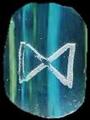
| The right rune represents the critical element of the future. Dagez means daylight, and represents divine light. This rune generally refers to dawn (the initial sparking of energy) or to midday (the climax of energy). Both dawn and midday are symbolic of change, but unlike the changes in the perpetual circle of the year which are slow and subtle, the changes over a day are much faster and more dramatic. The breaking of a new day is symbolic of the rapid illumination of dismal circumstances, and is suggestive of Satori. Be careful - although this rune generally suggests a positive change, the symbology of a peaking point suggests that there must be a change downward as well. Fortunately for some, this rune is cyclic and irreversible, and so permanence is not promised - the only thing you can be sure of is an exciting ride. |
|
|