Today's Runes for Rosie O'Donnell
| The Norn spread is used to plot the crucial elements of past, present, and future, and to reveal the evolution of the situation through the arc of time. Jade Runes are most commonly used for questions about love, friendship, and relationships. |
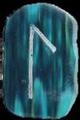
| The left rune represents an important element of the past. Laguz is the most strongly feminine of runes, representing water. Deep sexuality is suggested by this rune. Through Laguz, water is seen as the ocean - vast, uncontrollable, ever-changing, and vital. When interpreted as the returning tide, Laguz can also predict the inevitable return from a long journey. |
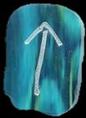
| The middle rune represents a deciding element of the present. Tyr is the symbol of the warrior. This rune most represents masculine force and potency, and frequently victory in battle. Beware though, for this rune represents directly the Norse god whose name it bears - Tyr stands out in legend for having sacrificed his hand that he might bind Fenrir, a monstrous wolf that threatens to swallow the world. As such, this rune is known to portend a great victory that can be bought with a terrible sacrifice. Tyr is also the god of law, frequently placed in such position above Odin. In this aspect, protection of justice may be had by this rune. |
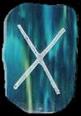
| The right rune represents the critical element of the future. Gebo means gift, and like many gifts, the rune may be understood on many levels. Gifts are generally positive things, for both the giver and the recipient. In many cultures however, gifts and favors carry with them an obligation to respond in kind. It is for this reason that gifts, and hence the rune Gebo, are frequently symbolic of friendships, marriages, alliances, mergers, and other bonds between people or organizations. Gebo is a strong rune and the unions represented are strong as well. Moreover, Gebo is not reversible, as true friendships are not easily undone. |
|
|