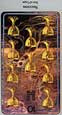
Today's Tarot for Alanis Morissette
| The Cross and Triangle spread is a powerful means of understanding complex situations, developed by the Hermetic Order of the Golden Dawn. This spread is rich in occult and mystical symbolism, and one of our favorites here at Facade. The Haindl Tarot weaves a tapestry of haunting beauty from the traditions of Native America, the Holy Grail, the I Ching, Kabbalah and the Norse Runes, and is the deck of choice for mystics and those seeking enlightenment. If you would like your own copy of the Haindl Tarot, you can buy it now! |
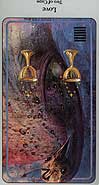 | The first card, the significator, is placed in the center of the cross. This card represents the prime energy manifest in your life. Two of Cups (Love), when reversed: Quarreling or jealousy. Uncertain future. Lack of commitment. |
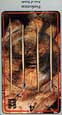
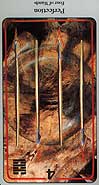 | The second card, placed above the significator, represents Air. It describes your spirit, process of thought, and the influence of reason. Four of Wands (Perfection), when reversed: Errors. Impatient for new start. Wait for genuine opportunity. |
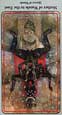
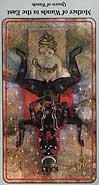 | The third card, placed to the right of the significator, represents Fire. It describes your motivations, creative energies, and the influence of passion. Mother of Wands (Kali), when reversed: Kali-like energy suppressed. Destructiveness outweighs joy and love. |
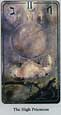
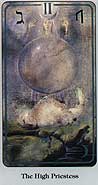 | The fourth card, placed below the significator, represents Water. It describes your emotions, meditations, and the influence of love. The High Priestess: A time for quiet, for looking inward. Seek peace. Use intuition and feeling. Peace and joy. Possibly, a lover who needs solitude or is avoiding commitment. |
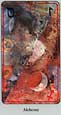
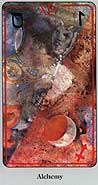 | The fifth card, placed to the left of the significator represents Earth. It describes your physical presence, position in life, and the influence of the material world. Alchemy: Measurement and combination. Do not allow setbacks to turn enthusiasm into its mirror image of dejection. Take control. Moderation. |
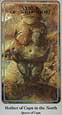
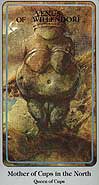 | At this point the cross is complete and the triangle is formed. The sixth card, placed on the bottom left of the triangle represents one of two opposing forces. Mother of Cups (Venus of Willendorf): Earthy, plain, honest person. Matriarch. Ancient forces. |
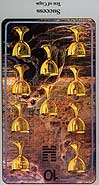 | The seventh card, placed on the bottom right of the triangle represents the force that opposes the bottom left card. These forces may be external, but they are frequently one's own inner archetypes in conflict. Ten of Cups (Success), when reversed: Success blocked. Negativity, apathy. |
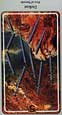
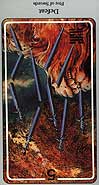 | The eighth card, the reconciler, is placed below the cross in the third vertex of the triangle. This is the force that will resolve the conflict between the bottom left and bottom right cards. By meditating on this force and bringing more of it into your life, you can bring the matter at hand to a swifter conclusion than would naturally occur. Five of Swords (Defeat), when reversed: Situation growing better, with courage and persistence. |
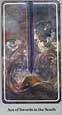
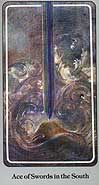 | The ninth and final card, placed in the center bottom of the triangle, represents the final outcome unless you change course. Ace of Swords: Intelligence. Clear thinking. Powerful personality or emotions. |
|
|