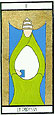
| The Celtic Cross spread is one of the most popular Tarot spreads, providing varied insight into many aspects of a complex situation and your role in it. The William Blake Tarot explores the mystical vision and artistry of the renowned English painter and poet. Through rich interpretations focused on creative undertakings, it has long been the deck of choice for artists, writers, musicians, and thinkers. For more information about this deck, or to buy your own personal copy, go to www.blaketarot.com.
|
 | The card not shown but at the center of the cross, represents the atmosphere surrounding the central issue. Magic, when reversed: Loss of control over the situation. Misdirection of powerful forces. Squandering the available resources. Ineffective communication. Taking action at the wrong time or in the wrong context. The use of naked aggressiveness when subtlety is required. Lack of tools and skills. |
 | The card visible at the center of the cross represents the obstacle that stands in your way - it may even be something that sounds good but is not actually to your benefit. Ten of Poetry (Prophecy), when reversed: Being swept away by a feeling of spiritual intervention. Profound existential awe. Bondage to elemental forces and divine will. Predetermination. The burden of prophecy and commitment to serve the greater good. Awakening to the full scope and indifference of the universe. In the creative process: A time of divine grace in which you have special access to creativity. Be humble despite your achievements; you are channeling from a higher source. |
 | The card at the top of the cross represents your goal, or the best you can achieve without a dramatic change of priorities. Seven of Painting (Patience), when reversed: Refusing to wait for the situation to develop or ripen. Demanding immediate material assistance or reinforcements. Possible delays and slowdowns. Feeling uncertain or apprehensive about a tangible issue. Procrastination. Squandering your resources. In the creative process: Straining to speed things up only produces anxiety, so get a grip and wait for everything to unfold according to its own timing. |
 | The card at the bottom of the cross represents the foundation on which the situation is based. Six of Music (Pleasure): "...we cannot experience pleasure but by means of others...". Being the center of attention. Receiving support from teamwork or group action. Satisfaction deriving from family, friends, colleagues. Participation in a social or community endeavor. Reunion. Keen awareness of the dance of life. Forging links and bonds with others. Experiencing a sense of belonging. Nostalgia and happy memories. In the creative process: Make use of collective or group energies, bringing them together for maximum benefit and mutual enjoyment. |
 | The card at the left of the cross represents a passing influence or something to be released. Five of Music (Melancholy): "Whatever is Born of Mortal Birth / Must be consumed with the Earth / To rise from Generation free: / Then what have I to do with thee?". Emotional disappointment. Existential angst. Spiritual insights following a sad event. Separating and moving on. Sadness, loss, grieving. Acknowledging your mistakes. Releasing ties and attachments from the past. In the creative process: Convert the pain of disappointment or loss into artistic expression. Let go of something old or dead and move on to something new and alive. |
 | The card at the right of the cross represents an approaching influence or something to be embraced. Three of Painting (Practice): A need to exercise and master your skills and talents. Creatively interacting with your peers. The play of social dynamics at work or on the job. Seeking a synthesis of the available factors. Building support. Integrating energies to achieve a mutual goal. In the creative process: Experimentation and manipulation are the keys to acquiring the experience needed to get the job done. |
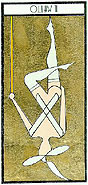
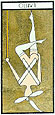
 | The card at the base of the staff represents your role or attitude. Whirlwind, when reversed: Winds of change make old visions obsolete. An act of god or stroke of bad luck. Inner turmoil cleverly disguised but unrestrained. Getting the run-around. Reaching a turning point. A good time to honor your gods. |
 | The card second from the bottom of the staff represents your environment and the people you are interacting with. Man of Painting, when reversed: The need to dominate the situation. Allowing theory to get in the way of pragmatics. Intoxication with a highly charged situation. Taking a dogmatic and self-indulgent approach. Obsessive focus on the task at hand. Bathing in the spotlight. In the creative process: Test and refine your ideas or product to see if it works as planned; be practical yet innovative. |
 | The card second from the top of the staff represents your hopes, fears, or an unexpected element that will come into play. Energy: Invigorated with lust for life and abundance of vitality. Relying on your physical strength and endurance. Honoring your natural instincts. Looking to animal or totem forces as allies to help you. Multiple or multilingual modes of expression. Gentle guidance. Having the courage of your convictions. |
 | The card at the top of the staff represents the ultimate outcome should you continue on this course. Six of Science (Passage), when reversed: Going to undue lengths to avoid surmountable obstacles. Movement without progress. Challenges imposed or undertaken without purpose or meaning. The illusion that new terrain bears nothing in common with the old. Latent possibilities are occluded or confused. Opportunities are overlooked. In the creative process: Your imagination needs to be uncovered or unleashed by resolving contradictory elements and seeking spiritual guidance. |