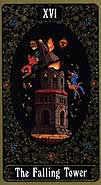
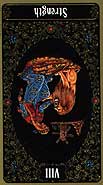
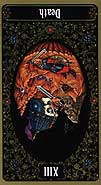
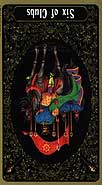
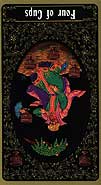
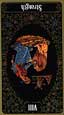
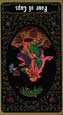
| The Celtic Cross spread is one of the most popular Tarot spreads, providing varied insight into many aspects of a complex situation and your role in it. The Palladini Tarot was created to "bridge the ancient and the future", using elements of Medieval, Egyptian and modern art. It is one of the most popular decks among new students of Tarot. If you would like your own copy of the Palladini Tarot, you can buy it now! |
 | The card not shown but at the center of the cross, represents the atmosphere surrounding the central issue. Nine of Rods (Strength), when reversed: Delayed preparations for an impending trial. Efforts compromised by traitors or saboteurs. The scattering of forces before the conclusive battle is fought. Ill health and faltering of the will. |
 | The card visible at the center of the cross represents the obstacle that stands in your way - it may even be something that sounds good but is not actually to your benefit. Justice: The achievement of balance and inner harmony after a great trial. Agreements, contracts, or treaties concluded justly. Things set to rights. Karma restored. A turn for the better in legal matters. |
 | The card at the top of the cross represents your goal, or the best you can achieve without a dramatic change of priorities. The Hanged Man, when reversed: Life in suspension. Selfish, materialistic, and untrusting attitudes. Unwillingness to make necessary sacrifices. Going along with the crowd, and refusing to hear the inner voice. Concessions and appeasements that backfire. |
 | The card at the bottom of the cross represents the foundation on which the situation is based. Two of Swords (Peace), when reversed: Indecision due to contradictory characteristics brought together. Tension in the aftermath of a quarrel that has been resolved. Scheming, abuse of trust, and agreements made in bad faith. Allowing the mind to block off the emotions. Self deception as a means of justifying cruel acts. |
 | The card at the left of the cross represents a passing influence or something to be released. The Hierophant, when reversed: Authoritarianism. Inflexible and dogmatic thinking. A calcified old regime. Bad or incompetent advice. Inability to hear a higher or inner voice, or pretending to hear it for personal gain. |
 | The card at the right of the cross represents an approaching influence or something to be embraced. Page of Swords, when reversed: The dark essence of air behaving as earth, such as a sandstorm: The approach of an unexpected challenge, met with muddled thought and unjust action. A person filled with a destructive appetite for all matters of mind and logic. Voyeurism, espionage, and misguided witch hunts. The use of clever argument and eloquent speech to mask the truth. |
 | The card at the base of the staff represents your role or attitude. The Tower, when reversed: Unexpected upheaval leading to a positive change in life. Catastrophe survived or narrowly avoided. A new lifestyle and enlightenment. May indicate a broken relationship, divorce, or failure in business or career. |
 | The card second from the bottom of the staff represents your environment and the people you are interacting with. The Devil, when reversed: Resistance of temptation. Freedom from bondage. The pursuit of higher goals despite the influence of luxury and pleasure. Release from obsession with money and power. Liberation from fear, weakness and indecision through communion with higher powers or the inner voice. |
 | The card second from the top of the staff represents your hopes, fears, or an unexpected element that will come into play. Six of Pentacles (Success): A time of prosperity and profit. Success and generosity in material things. Power and influence turned to noble pursuits. Philanthropy, and the balancing of physical and spiritual life. May suggest gifts or aid to one in need. |
 | The card at the top of the staff represents the ultimate outcome should you continue on this course. Nine of Pentacles (Gain): Good luck attending material affairs. Attaining refinement and embracing elegance. Discipline and nobility applied to the maintenance of security and stability. The wise use of resources and foresight. The fulfillment that comes with accomplishment, and the turning of attention to higher things. |