Today's Tarot for Frank Lloyd Wright
| The Fourfold Vision spread offers a progression of different ways of looking at an object, person, or situation. It is a powerful tool for gaining deeper insight into the specific subjects of other readings. The Sola Busca Tarot is a color embellished reproduction of the only known extant 15th century Tarot deck engraved on metal. It is the choice of purists and those seeking a direct channel with the dawn of Western occultism. |
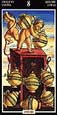
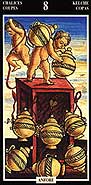 | The card on the far right represents the object being viewed, be it an idea, relationship, or the self. 8 Anfore (Indolence): Losing interest in a matter deeply important to you. Being forced to abandon something in which you had invested great love and devotion. Seeking earthly, physical pleasures, to the exclusion of spiritual growth and emotional fulfillment. Emotional withdrawal and lethargy. |
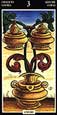
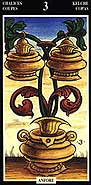 | The card second from the right represents the physical vision: how the object is seen at a base or mechanical level. 3 Anfore (Abundance): A time of merriment and reflection spent in the company of friends and loved ones. The conclusion of a matter in plenty and perfection. The strength of a diverse community being brought together. May suggest a celebration, festival, anniversary, wedding, baby shower, or other joyous gathering. |
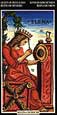
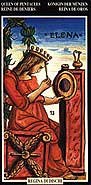 | The card in the middle represents the mental vision: the object personified and seen through a humanized perspective. Regina di Dischi (Queen of Discs): The essence of earth behaving as water, such as a hot spring: A warm and generous host, providing shelter and comfort for all who would seek it. A person steadfast, practical, and domestic, able to create opulence and stability in any setting. The qualities of maturity and sensibility, coupled with an innate appreciation for nature and the material world. |
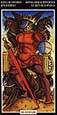
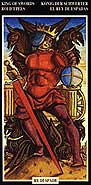 | The card second from the left represents the emotional vision: how passions and values are creatively stimulated by the mental vision. Re di Spade (King of Swords): The essence of air, such as a clear blue sky: A mature leader of unwavering ethics and indisputable authority. An incorruptible judge, whose devotion to the law cannot be swayed by emotion or material concerns. Perfect clarity of thought, directness of action, and eloquence of speech. One who, like a great general, inspires not love or devotion, but absolute trust and loyalty. |
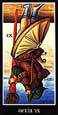
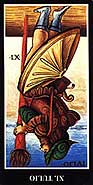 | The card on the far left represents the fourfold or mystical vision: still viewing through the previous three, we now add a spiritual element, revealing unseen aspects of the object. Tulio (Strength), when reversed: Weakness in the face of obstacles and adversity. Tremendous power released at the wrong moment. Inability to defend oneself. Confusion, and lack of preparedness. Illness, hardship, distress and the failing of physical force. Dominant behavior, abusiveness and a possible loss of reputation. |
|
|