Today's Tarot for George Clooney
| The Celtic Cross spread is one of the most popular Tarot spreads, providing varied insight into many aspects of a complex situation and your role in it. The Palladini Tarot was created to "bridge the ancient and the future", using elements of Medieval, Egyptian and modern art. It is one of the most popular decks among new students of Tarot. If you would like your own copy of the Palladini Tarot, you can buy it now! |
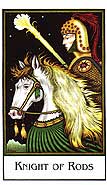 | The card not shown but at the center of the cross, represents the atmosphere surrounding the central issue. Knight of Rods: The essence of fire, such a great conflagration. One filled with vitality and passion for life. A sexy and exciting person, daring in their actions, cocky in their attitude, and utterly without fear. Absolute sincerity, coupled with violent emotions that swing wildly from one extreme to another. Boundless creativity and lust for a change of both pace and place. The rapid approach, or more likely departure, of something that sets your world ablaze. Often suggests travel or escape. |
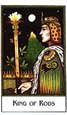
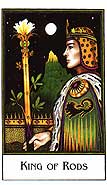 | The card visible at the center of the cross represents the obstacle that stands in your way - it may even be something that sounds good but is not actually to your benefit. King of Rods: The essence of fire behaving as air, such as lightning: A great and daring leader who inspires others to rise to challenges alongside him. An artist who can take hold of an idea and make it a reality through bold action. One who is forceful, charismatic, and honest, leading by example, but unafraid to invest authority in others. A dashing and magnetic personality, carrying authority naturally, and striking at the world with swiftness and grace. |
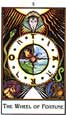
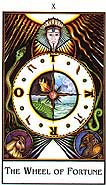 | The card at the top of the cross represents your goal, or the best you can achieve without a dramatic change of priorities. Wheel of Fortune: The path of destiny. Karma on a grand scale. An unexpected turn of good fortune. A link in the chain of events. Success, luck, and happiness. |
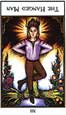
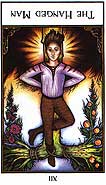 | The card at the bottom of the cross represents the foundation on which the situation is based. The Hanged Man, when reversed: Life in suspension. Selfish, materialistic, and untrusting attitudes. Unwillingness to make necessary sacrifices. Going along with the crowd, and refusing to hear the inner voice. Concessions and appeasements that backfire. |
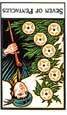
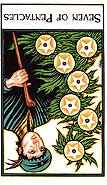 | The card at the left of the cross represents a passing influence or something to be released. Seven of Pentacles (Assessment), when reversed: Labors abandoned before completion. Impatience, lack of effort, and the wasting of time. Idle and unprofitable speculation. |
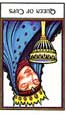
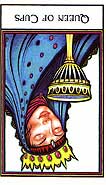 | The card at the right of the cross represents an approaching influence or something to be embraced. Queen of Cups, when reversed: The dark essence of water, such as a deep and foreboding lake: Discomfort with the worlds of mind and matter, leading to a retreat to the spiritual. The embrace of negative relationships, driven by the desperate fear of being alone. Devotion to fantasies and daydreams, to the exclusion of practical skills or the pursuit of knowledge. Insecurity leading to dishonor, vice, and undue susceptibility to outside influences. |
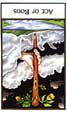
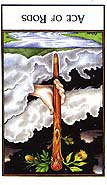 | The card at the base of the staff represents your role or attitude. Ace of Rods, when reversed: The seed of a new crisis - perhaps as yet unseen. The start of an explosive situation threatening to consume all who get too close. The herald of birth, invention, or upheaval. An innate and primal force unleashed. May suggest a surge of vitality, creativity, or fertility that can set dangerous events in motion. |
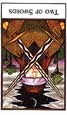
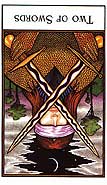 | The card second from the bottom of the staff represents your environment and the people you are interacting with. Two of Swords (Peace), when reversed: Indecision due to contradictory characteristics brought together. Tension in the aftermath of a quarrel that has been resolved. Scheming, abuse of trust, and agreements made in bad faith. Allowing the mind to block off the emotions. Self deception as a means of justifying cruel acts. |
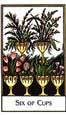
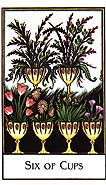 | The card second from the top of the staff represents your hopes, fears, or an unexpected element that will come into play. Six of Cups (Pleasure): Opening your heart to the simple pleasures of life. Fond memories fuel the playful embrace of love and life. Experiencing the joy of youth and sexual innocence. Engaging in acts of gentle kindness. Harmony of natural forces without effort or strain. Meeting an old friend. |
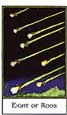
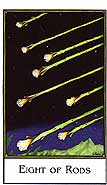 | The card at the top of the staff represents the ultimate outcome should you continue on this course. Eight of Rods (Swiftness): A sudden release of raw power, cutting through confusion and indecision, and setting things in motion. Rapid progress towards a desired goal, brought about by immediate and decisive action. Boldness and daring in love, business, travel, or spiritual growth. |
|
|