| The Hagall spread is a tool for revealing the path of spiritual growth in difficult situations. It is a favorite of mystics and those confronting a major life challenge. The Voodoo Tarot of New Orleans is a deck rich in primal spirituality. It draws on images from the religion Santeria, which weaves Catholic and African beliefs into a vibrant tapestry. This exceptional deck is most often used to ask questions regarding the joy, fury, and spirituality in everyday life. If you would like your own copy of the Voodoo Tarot of New Orleans, you can buy it now! |
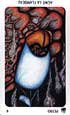
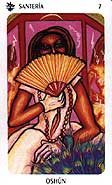 | The card in the middle of the circle represents the core or central issue of the situation. Oshun (Seven of Discs): A pause to check on the progress of your labors. Making difficult financial decisions. Exercising patience and perseverance. Evaluating the status of your work and your options for the future. |
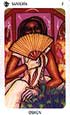
 | The card at the bottom of the circle represents something you did to bring the situation about. Carnival (The World): Completeness and intricacy of design. A great work. Achievement, reward, and well-earned recognition. A time of success, prosperity, security and joy. May also indicate travel or a change in residence. |
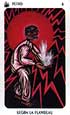
 | The card at the bottom left of the circle represents your beliefs, impressions, or expectations. Simbi La Flambeau (Eight of Wands): A sudden release of raw power, cutting through confusion and indecision, and setting things in motion. Rapid progress towards a desired goal, brought about by immediate and decisive action. Boldness and daring in love, business, travel, or spiritual growth. |
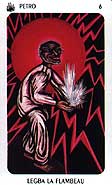 | The card at the bottom right of the circle represents the most likely outcome of the situation given present circumstances. Legba La Flambeau (Six of Wands): A sense of honor and satisfaction at the resolution of an important matter. Triumph after great struggle. Jubilation at the hearing of good news. The realization of hopes and desires. |
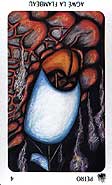 | The card at the upper left of the circle represents the spiritual history of the situation the things you've learned. Agwe La Flambeau (Four of Wands), when reversed: Squandering a great and hard won victory through decadence and laziness. Failing to reward those truly responsible for an achievement. Using past accomplishments as an excuse to ignore current problems. Abandoning the very qualities that brought about initial success. |
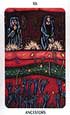
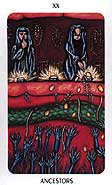 | The card at the top of the circle represents the spiritual tasks and challenges of the present situation. Ancestors (Judgment): A swift and conclusive decision. The resolution of a matter long unanswered. A change in point of view, most frequently towards greater enlightenment. Final balancing of karma. |
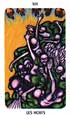
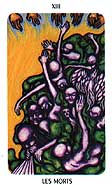 | The card at the upper right of the circle represents the metamorphosis of the spiritual situation, and how your knowledge will evolve. Les Morts (Death): A major change or transformation, possibly traumatic and unexpected. Freedom from the shackles of the past. A new beginning. Death coupled with rebirth, usually related to consciousness and lifestyle. |
 | The card at the left of the lower line represents the person or qualities that will sustain your spiritual journey. Deluge (The Tower): Unforeseen catastrophe. An abrupt change, perhaps leading to a new lifestyle and enlightenment. May indicate a broken relationship, divorce, or failure in business or career. |
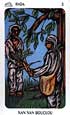
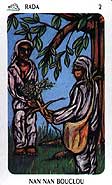 | The card in the middle of the lower line represents the qualities that you express in this circumstance. Nan Nan Bouclou (Two of Swords): Contradictory characteristics brought together as a means of resolving a conflict. Refusing to be ruled by negative emotions. Strife brought to a close through clarity of mind and restraint of force. Turning a blind eye to the minor infractions of others. |
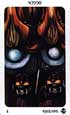
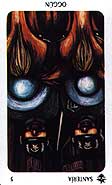 | The card at the right of the lower line represents the person or qualities that will reveal spiritual knowledge. Oggun (Five of Discs), when reversed: Concern over finance leads to prudent action. Impending physical threat is met with calm and skill. Suffering and loneliness leads to spiritual growth. Stress is met without resorting to excess or the pursuit of oblivion. |