| The Celtic Cross spread is one of the most popular Tarot spreads, providing varied insight into many aspects of a complex situation and your role in it. The Haindl Tarot weaves a tapestry of haunting beauty from the traditions of Native America, the Holy Grail, the I Ching, Kabbalah and the Norse Runes, and is the deck of choice for mystics and those seeking enlightenment. If you would like your own copy of the Haindl Tarot, you can buy it now! |
 | The card not shown but at the center of the cross, represents the atmosphere surrounding the central issue. Six of Cups (Happiness), when reversed: The happy moment may be passing. Not recognizing happiness. Unbalanced or excessive behavior. |
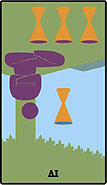
 | The card visible at the center of the cross represents the obstacle that stands in your way - it may even be something that sounds good but is not actually to your benefit. Ace of Wands, when reversed: Lack of focus. Scattered or confused efforts. Pessimism. |
 | The card at the top of the cross represents your goal, or the best you can achieve without a dramatic change of priorities. The Star, when reversed: Fears for the future. Isolation. Tension or anxiety. Hope. |
 | The card at the bottom of the cross represents the foundation on which the situation is based. The Emperor: Influence of society, law. Resurgence of energy. Sexual potency. Arrogance. Insensitivity. Energy and desire. |
 | The card at the left of the cross represents a passing influence or something to be released. The Hanged Man, when reversed: Being overly influenced by outside ideas. Pressure to conform. Demands. Sacrificing something to get passed hang-ups. Lack of purpose. |
 | The card at the right of the cross represents an approaching influence or something to be embraced. Mother of Wands (Kali): A wild, female energy. Dark power, sexual energy. |
 | The card at the base of the staff represents your role or attitude. Seven of Wands (Courage), when reversed: Loss of nerve. Hesitation. Seek an alternative, possibly reconciliation. |
 | The card second from the bottom of the staff represents your environment and the people you are interacting with. Ace of Stones, when reversed: Unappreciated gifts. Materialism. Conflicts over money or property. |
 | The card second from the top of the staff represents your hopes, fears, or an unexpected element that will come into play. Ten of Stones (Richness), when reversed: Delay. Not appreciating material wealth and security. |
 | The card at the top of the staff represents the ultimate outcome should you continue on this course. Five of Swords (Defeat): An overwhelming situation. Need to hold onto principles until the time comes to make a change. |