| The Celtic Cross spread is one of the most popular Tarot spreads, providing varied insight into many aspects of a complex situation and your role in it. The Palladini Tarot was created to "bridge the ancient and the future", using elements of Medieval, Egyptian and modern art. It is one of the most popular decks among new students of Tarot. If you would like your own copy of the Palladini Tarot, you can buy it now! |
 | The card not shown but at the center of the cross, represents the atmosphere surrounding the central issue. Three of Rods (Virtue), when reversed: Pride and arrogance. Convincing oneself that the ends justify the means. A great act of betrayal set in motion. Sinking to the level of an opponent. The vain quest for glory and a personal spotlight. Charity or friendship offered with intent of material gain. |
 | The card visible at the center of the cross represents the obstacle that stands in your way - it may even be something that sounds good but is not actually to your benefit. The Tower: Unforeseen catastrophe. An abrupt change, perhaps leading to a new lifestyle and enlightenment. May indicate a broken relationship, divorce, or failure in business or career. |
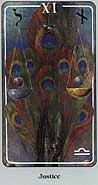
 | The card at the top of the cross represents your goal, or the best you can achieve without a dramatic change of priorities. Justice: The achievement of balance and inner harmony after a great trial. Agreements, contracts, or treaties concluded justly. Things set to rights. Karma restored. A turn for the better in legal matters. |
 | The card at the bottom of the cross represents the foundation on which the situation is based. Strength: Raw power. Health and physical fortitude. A surge of tremendous force. Recovery from sickness. Victory after apprehension and fear. The ability to face and overcome opposition brings the inner qualities of strength and forbearance. Delays and setbacks will be overcome. |
 | The card at the left of the cross represents a passing influence or something to be released. The High Priestess, when reversed: Being confused and led astray from the true path. Spiritual deception. Overzealous and shallow-minded pursuit of the esoteric. Insecurity, conceit and self-destructiveness. The forces of nature unleashed. |
 | The card at the right of the cross represents an approaching influence or something to be embraced. Eight of Swords (Interference), when reversed: Learning a valuable lesson from the unexpected consequences of prior decisions. Narrowly escaping criticism, censure, and the imposition of external restrictions. Focusing on the crux of a problem and freeing oneself from a difficult situation. Coming to grips with a past failure or humiliation and moving on. |
 | The card at the base of the staff represents your role or attitude. Temperance: Calm and restraint. Self-control, patience and tact in handling situations. The act of applying balanced spiritual and psychic forces to physical life. |
 | The card second from the bottom of the staff represents your environment and the people you are interacting with. Death: A major change or transformation, possibly traumatic and unexpected. Freedom from the shackles of the past. A new beginning. Death coupled with rebirth, usually related to consciousness and lifestyle. |
 | The card second from the top of the staff represents your hopes, fears, or an unexpected element that will come into play. Two of Cups (Love): The perfect harmony of union, in romance, friendship, or business. A deep and palpable connection radiating joy and contentment. A great concordance or pledge of fidelity. The joining of male and female interpreted in the broadest sense. The sanctification of the natural through that which exists on a higher plane. May indicate the meeting of a kindred soul, marriage, engagement, merger, or partnership. |
 | The card at the top of the staff represents the ultimate outcome should you continue on this course. Knight of Cups, when reversed: The dark essence of water behaving as fire, such as a flash flood: Deceptive charm in the service of intense insecurity and rapidly shifting moods. Selfishness, indolence, and a complete lack of maturity. Misguided idealism divorced from practicality. Destructive romantic passions and infidelity. |