| The Hagall spread is a tool for revealing the path of spiritual growth in difficult situations. It is a favorite of mystics and those confronting a major life challenge. The Rider Waite Tarot is the most widely recognized Tarot deck, and the first deck published in the 20th century. It was created by members of the Hermetic Order of the Golden Dawn, and is especially suited to questions of a mystical nature. If you would like your own copy of the Rider Waite Tarot, you can buy it now! |
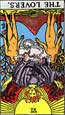
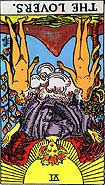 | The card in the middle of the circle represents the core or central issue of the situation. The Lovers, when reversed: Inner strife, frustration, suspicion, and disagreements in a relationship. Irresponsibility and indecision. Avoiding true intimacy in favor of lust. Unfaithfulness. |
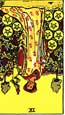
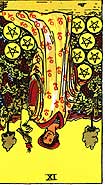 | The card at the bottom of the circle represents something you did to bring the situation about. Nine of Pentacles (Gain), when reversed: Bad luck attending material affairs. Elitism and snobbishness. Lack discipline resulting in the erosion of security and stability. Contempt for the exact labors that brought one to a position of refinement. Dishonesty in financial matters. |
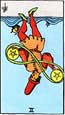
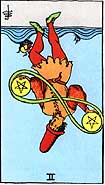 | The card at the bottom left of the circle represents your beliefs, impressions, or expectations. Two of Pentacles (Change), when reversed: Imbalance and disharmony as a result of upheaval and transformation. Taking one step forward for every two steps back. Chaos caused by the shifting importance of projects and priorities. Industrious yet unreliable actions. Furious activity producing negligible results. |
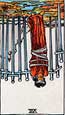
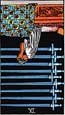
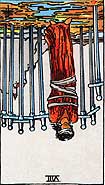 | The card at the bottom right of the circle represents the most likely outcome of the situation given present circumstances. Eight of Swords (Interference), when reversed: Learning a valuable lesson from the unexpected consequences of prior decisions. Narrowly escaping criticism, censure, and the imposition of external restrictions. Focusing on the crux of a problem and freeing oneself from a difficult situation. Coming to grips with a past failure or humiliation and moving on. |
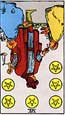
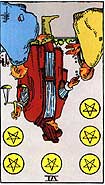 | The card at the upper left of the circle represents the spiritual history of the situation the things you've learned. Six of Pentacles (Success), when reversed: Insolence and conceit with material things. Overconfidence, bad investments, and imprudent handing of acquired wealth. Contempt for those less fortunate. Deception and petty disputes driven by greed and envy. |
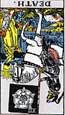
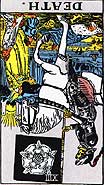 | The card at the top of the circle represents the spiritual tasks and challenges of the present situation. Death, when reversed: Stagnation or petrifaction. The refusal to let go of the past. Resistance to change because of fear. |
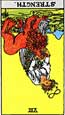
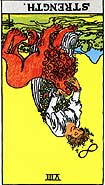 | The card at the upper right of the circle represents the metamorphosis of the spiritual situation, and how your knowledge will evolve. Strength, when reversed: Weakness in the face of obstacles and adversity. Tremendous power released at the wrong moment. Inability to defend oneself. Confusion, and lack of preparedness. Illness, hardship, distress and the failing of physical force. Dominant behavior, abusiveness and a possible loss of reputation. |
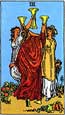
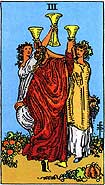 | The card at the left of the lower line represents the person or qualities that will sustain your spiritual journey. Three of Cups (Abundance): A time of merriment and reflection spent in the company of friends and loved ones. The conclusion of a matter in plenty and perfection. The strength of a diverse community being brought together. May suggest a celebration, festival, anniversary, wedding, baby shower, or other joyous gathering. |
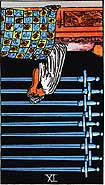 | The card in the middle of the lower line represents the qualities that you express in this circumstance. Nine of Swords (Cruelty), when reversed: Mental anguish or ill health endured and overcome. Refusal to be dragged down by the dishonor of others. Attempting to avert a shameful or regrettable act. Faithfulness, patience and unselfishness. May indicate the narrow avoidance of a death or other catastrophic loss. |
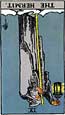
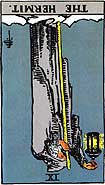 | The card at the right of the lower line represents the person or qualities that will reveal spiritual knowledge. The Hermit, when reversed: Detachment based on fear, irresponsibility or naivet�. Self-imposed isolation from friends and loved ones. Listening to the wrong advice or ignoring good counsel. Concealment, disguise, and unreasoned caution. |