| The Celtic Cross spread is one of the most popular Tarot spreads, providing varied insight into many aspects of a complex situation and your role in it. The Marseilles Tarot is an 18th century creation of obscure origins. It predates the occult symbolism of the Rider Waite deck by roughly 200 years, giving the readings a unique and rustic flavor. Many swear by this deck as the true oracle of the common man. If you would like your own copy of the Marseilles Tarot, you can buy it now! |
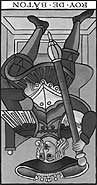 | The card not shown but at the center of the cross, represents the atmosphere surrounding the central issue. Roy de Baton (King of Batons), when reversed: The dark essence of fire behaving as air, such as lightning: An exciting and reckless leader who inspires others to irresponsible acts. An artist whose depraved love of chaos causes him to take hold of destructive ideas and make them appealing to the masses. One who is charismatic and intimidating, using demonstrations of his own skill to dupe others into accepting responsibilities beyond their ability. A dashing and magnetic personality, appearing and disappearing with great suddenness, and leaving upheaval in his wake. |
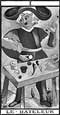
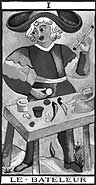 | The card visible at the center of the cross represents the obstacle that stands in your way - it may even be something that sounds good but is not actually to your benefit. Le Bateleur (The Magician): Mastery over word, mind, and matter. The ability to turn ideas into actions, handle problems, and control one's life. The initiation of new projects, great works, or a new way of life. Eloquent and moving communication. Arcane and eldritch technologies. |
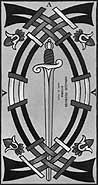 | The card at the top of the cross represents your goal, or the best you can achieve without a dramatic change of priorities. Five of Swords (Defeat), when reversed: Refusing to achieve success through personal degradation. Friendship maintained through the abandonment of a dishonorable gain. Slander and infamy avoided. |
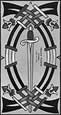
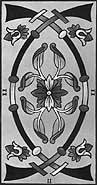 | The card at the bottom of the cross represents the foundation on which the situation is based. Two of Swords (Peace): Contradictory characteristics brought together as a means of resolving a conflict. Refusing to be ruled by negative emotions. Strife brought to a close through clarity of mind and restraint of force. Turning a blind eye to the minor infractions of others. |
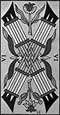
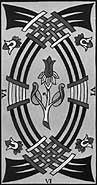 | The card at the left of the cross represents a passing influence or something to be released. Six of Swords (Science): Trusting in intelligence and intuition and setting off into the unknown. Leaving an untenable situation and charting a new course. Passage from difficulty and progress towards a solution. The road to recovery. Travel and exploration. |
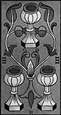
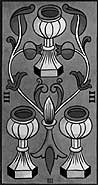 | The card at the right of the cross represents an approaching influence or something to be embraced. Three of Cups (Abundance): A time of merriment and reflection spent in the company of friends and loved ones. The conclusion of a matter in plenty and perfection. The strength of a diverse community being brought together. May suggest a celebration, festival, anniversary, wedding, baby shower, or other joyous gathering. |
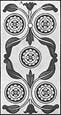
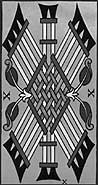 | The card at the base of the staff represents your role or attitude. Ten of Batons (Oppression): Success and gain, leading you to take on a burden greater than you can carry. Noble leadership transformed, through lack of restraint, into tyranny. The crushing weight of ultimate responsibility. Having spent their fuel, the engines of creation grind to a halt. |
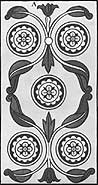 | The card second from the bottom of the staff represents your environment and the people you are interacting with. Five of Coins (Worry), when reversed: Concern over finance leads to prudent action. Impending physical threat is met with calm and skill. Suffering and loneliness leads to spiritual growth. Stress is met without resorting to excess or the pursuit of oblivion. |
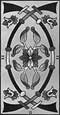
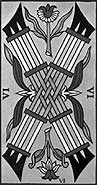 | The card second from the top of the staff represents your hopes, fears, or an unexpected element that will come into play. Six of Batons (Victory): A sense of honor and satisfaction at the resolution of an important matter. Triumph after great struggle. Jubilation at the hearing of good news. The realization of hopes and desires. |
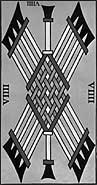 | The card at the top of the staff represents the ultimate outcome should you continue on this course. Nine of Batons (Strength), when reversed: Delayed preparations for an impending trial. Efforts compromised by traitors or saboteurs. The scattering of forces before the conclusive battle is fought. Ill health and faltering of the will. |