Today's Tarot for Michael Moore
| The Fourfold Vision spread offers a progression of different ways of looking at an object, person, or situation. It is a powerful tool for gaining deeper insight into the specific subjects of other readings. The Curious Tarot is the rarest and most unusual of modern decks. The cards form a surreal collage of American consumer imagery, eerily capturing the archetypes of the atomic age. It is the deck of those who seek to harness the ancient tribal energy that courses through the modern urban world. There are only 100 Curious Tarot decks in existence - if you want one, buy it now!
|
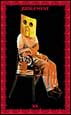
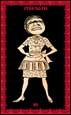
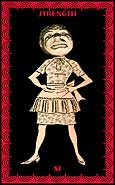 | The card on the far right represents the object being viewed, be it an idea, relationship, or the self. Strength: Raw power. Health and physical fortitude. A surge of tremendous force. Recovery from sickness. Victory after apprehension and fear. The ability to face and overcome opposition brings the inner qualities of strength and forbearance. Delays and setbacks will be overcome. |
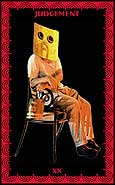 | The card second from the right represents the physical vision: how the object is seen at a base or mechanical level. Judgement: A swift and conclusive decision. The resolution of a matter long unanswered. A change in point of view, most frequently towards greater enlightenment. Final balancing of karma. |
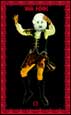
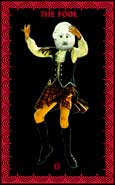 | The card in the middle represents the mental vision: the object personified and seen through a humanized perspective. The Fool: Fearlessness, imagination, open-mindedness, and an adventurous spirit. Freedom from cares and worries. Ideas, thoughts, and impulses coming from a completely unexpected place. Nonchalance at the threshold of gaining all or losing all. Extravagance and intoxication with life. The pure and undifferentiated power of creation itself, where ultimate knowledge and oblivion are unified. |
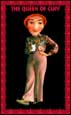
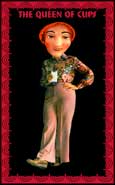 | The card second from the left represents the emotional vision: how passions and values are creatively stimulated by the mental vision. Queen of Cups: The essence of water, such as a deep and placid lake: Spirituality, maturity, and grace. A natural counselor and healer, One whose relaxed presence seems to embody deep love and spirituality. A tranquil poet who reflects the nature of the observer. The embrace of all things dreamlike and receptive, such as perfect and unconditional love. |
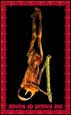
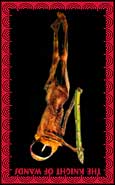 | The card on the far left represents the fourfold or mystical vision: still viewing through the previous three, we now add a spiritual element, revealing unseen aspects of the object. Knight of Wands, when reversed: The dark essence of fire, such as a great conflagration: One filled with vitality and limitless appetite. A sexy and exciting person, obsessed with style and outward appearance, overconfident in their abilities, and foolhardy in their actions. A hot temper and domineering nature, coupled with a love of false drama and all things theatrical. Anxiety over remaining in one place or with one person for too long. The rapid approach, or more likely departure, of someone or something that ruptures your world. Often suggests travel as the result of discord, or cruel indifference. |
|
|