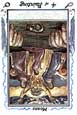
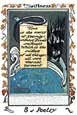
| The Celtic Cross spread is one of the most popular Tarot spreads, providing varied insight into many aspects of a complex situation and your role in it. The William Blake Tarot explores the mystical vision and artistry of the renowned English painter and poet. Through rich interpretations focused on creative undertakings, it has long been the deck of choice for artists, writers, musicians, and thinkers. For more information about this deck, or to buy your own personal copy, go to www.blaketarot.com.
|
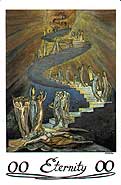 | The card not shown but at the center of the cross, represents the atmosphere surrounding the central issue. Eternity: The intervention of transcendent forces in the everyday world. The mighty are brought low and the meek are elevated. The transience of lesser concerns brings about the healing of old wounds and the achievement of great wisdom. A timeless perspective and the revelation of profound and immutable truth. Divine inspiration. |
 | The card visible at the center of the cross represents the obstacle that stands in your way - it may even be something that sounds good but is not actually to your benefit. Angel of Painting: "The Graphic Muse". Visionary reverie. Coalescing plans and agendas in your imagination. Contemplation prior to action. Making use of appropriate tools. Getting an overview of the situation, particularly regarding its physical or material aspects. "Getting the feel" of things. In the creative process: Look for or contemplate a solid idea, a practical point of view that can instigate a whole new direction in your work or project. |
 | The card at the top of the cross represents your goal, or the best you can achieve without a dramatic change of priorities. Forgiveness: A trial-and-error blend of creative solutions to a problem or complex issue. Keeping things in proportion and proper balance by making needed adjustments. Managing your time and resources carefully. Listening for inner guidance and tuning in to spiritual advice. Promoting forgiveness and healing, being compassionate toward those around you. |
 | The card at the bottom of the cross represents the foundation on which the situation is based. Man of Science, when reversed: Perfectionism. Personal detachment. Being oblivious to your surroundings and to unforeseen possibilities. Tendency to be opinionated and aloof. Delusions of grandeur. Inability to perceive human or spiritual values. In the creative process: Scrutinize and test every aspect of your work so as to refine and perfect it. |
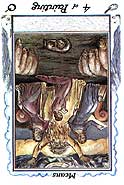 | The card at the left of the cross represents a passing influence or something to be released. Four of Painting (Means), when reversed: Obsession with material prosperity and contentment. Attachment to money and material goods. Creative achievements blocked by lack of material resources. Consolidation of personnel and materials at the expense of the objective at hand. Overwhelming need for order and structure. Emphasis on controlling, dominating, or monopolizing. In the creative process: Before reaching out for creative inspiration, prepare the groundwork: by appropriately allocating your resources and assigning creative tasks. |
 | The card at the right of the cross represents an approaching influence or something to be embraced. Two of Painting (Balance): A choice regarding something tangible or physical. Body-awareness is a key factor; hang in there. Balance as a dynamic force. Using interaction and negotiation to keep energy flowing. Stretching your abilities to bridge a gap or to reconcile differences. In the creative process: A breach in the project requires inner strength and timely decisions; stick with the task and seek cooperative assistance. |
 | The card at the base of the staff represents your role or attitude. Ten of Poetry (Prophecy), when reversed: Being swept away by a feeling of spiritual intervention. Profound existential awe. Bondage to elemental forces and divine will. Predetermination. The burden of prophecy and commitment to serve the greater good. Awakening to the full scope and indifference of the universe. In the creative process: A time of divine grace in which you have special access to creativity. Be humble despite your achievements; you are channeling from a higher source. |
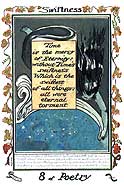 | The card second from the bottom of the staff represents your environment and the people you are interacting with. Eight of Poetry (Swiftness): "Time is the mercy of Eternity: / without Time's swiftness Which is the swiftest of all things: / all were eternal torment". Vigorous and imaginative assertion is strongly indicated. Experiencing the relativity of time. The speeding-up of events or gathering of energy. Falling in love, or being swept off your feet. Everything is up in the air or in process. Flux. Rapid communications across time and space. The Internet. Look for coincidences and serendipity at work. In the creative process: Transcend all illusions of time and space by using your imagination, which can take you anywhere at any time. |
 | The card second from the top of the staff represents your hopes, fears, or an unexpected element that will come into play. Eight of Painting (Discipline), when reversed: Mismanagement of your workload or time. Failing to get a grip on the situation. Refusal to listen to a mentor or inner guide. A need for physical assessment and self-improvement. Seek appropriate education and training. Inability to take one step at a time. Lack of due diligence. Collapsing under a mountain of work. In the creative process: Even though you may have a long way to go, a methodical approach incorporating guidance and training will ultimately lead you to the top. |
 | The card at the top of the staff represents the ultimate outcome should you continue on this course. Two of Poetry (Individuality), when reversed: Mistaking personal perception for the zeitgeist. Being blinded by the appearances of things. Treating the objective as subjective. Believing that self-knowledge cannot be found through consultation with others. Deciding between societal and individual points of view. Looking for something in the wrong place. In the creative process: Distinguish between the expression of your Self and the expression of your ego; discover the difference between wise individuality and unwise individualism. |