| The Celtic Cross spread is one of the most popular Tarot spreads, providing varied insight into many aspects of a complex situation and your role in it. The Sola Busca Tarot is a color embellished reproduction of the only known extant 15th century Tarot deck engraved on metal. It is the choice of purists and those seeking a direct channel with the dawn of Western occultism. |
 | The card not shown but at the center of the cross, represents the atmosphere surrounding the central issue. Re di Anfore (King of Cups), when reversed: The dark essence of water behaving as air, such as rain clouds in a gray sky: A pillar of maturity and patience, hiding a deep insecurity and an indecisive nature. One who secretly lusts for power, but lacks the courage, intellect, or work ethic necessary to take it. A charming seducer who appears innocent and understanding, but is in fact selfish and unfaithful. |
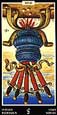
 | The card visible at the center of the cross represents the obstacle that stands in your way - it may even be something that sounds good but is not actually to your benefit. 10 Dischi (Wealth), when reversed: Material prosperity and riches squandered through slothfulness, gambling, or family problems. The loss of reputation or inheritance, or the failure to pass an inheritance along to one's children. |
 | The card at the top of the cross represents your goal, or the best you can achieve without a dramatic change of priorities. Nabuchodenasor (The Tower of Babel), when reversed: Incompleteness and shoddy design. A great work betrayed. Insecurity, fear of change, and the failure to reach goals. Regret and disappointment. |
 | The card at the bottom of the cross represents the foundation on which the situation is based. 1 Dischi (Ace of Discs): The seed of prosperity and material gain - perhaps as yet unseen. A new foundation from which to turn your dreams into reality. The need to focus on the practical and understand the dynamics of the natural world. May represent a gift, document, inheritance, or an unexpected opportunity for physical achievement. |
 | The card at the left of the cross represents a passing influence or something to be released. 7 Mazze (Valor), when reversed: Failure to stand up for your beliefs in the face of a hostile majority. A self-fulfilling fear of failure or embarrassment. Great challenges met with cowardice. Quarrels, perplexity, and indecision at a crucial moment. |
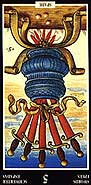 | The card at the right of the cross represents an approaching influence or something to be embraced. 5 Spade (Defeat), when reversed: Refusing to achieve success through personal degradation. Friendship maintained through the abandonment of a dishonorable gain. Slander and infamy avoided. |
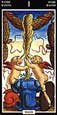
 | The card at the base of the staff represents your role or attitude. Sesto (The Lovers), when reversed: Inner strife, frustration, suspicion, and disagreements in a relationship. Irresponsibility and indecision. Avoiding true intimacy in favor of lust. Unfaithfulness. |
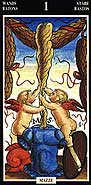 | The card second from the bottom of the staff represents your environment and the people you are interacting with. 1 Mazze (Ace of Wands): The seed of a new venture - perhaps as yet unseen. An opportunity to be met with boldness, vigor, and enthusiasm. The herald of birth, invention, or entrepreneurship. An innate and primal force released. May suggest a surge of vitality, creativity, or fertility that can set things in motion. |
 | The card second from the top of the staff represents your hopes, fears, or an unexpected element that will come into play. Fante di Mazze (Page of Wands), when reversed: The dark essence of fire behaving as earth, such as dry wood: The surprising appearance of a new passion or inflammatory news. A trickster who can unexpectedly ignite a dangerous situation. The intensity and childish imagination that can send even the most stable venture spinning wildly out of control. Can represent a person outwardly timid, but harboring unexpected inner fury. May indicate the birth of a child. |
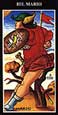
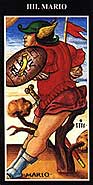 | The card at the top of the staff represents the ultimate outcome should you continue on this course. Mario (The Emperor): Worldly authority and power. Social mastery and oratory. One who is intelligent, experienced, confident and reasonable. A patriarch or primary male influence. The motive force of politics and society. The ability to fulfill plans and use mental control over the emotions. |