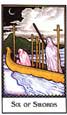
| The Two Paths spread provides insight into an important decision ahead of you, the possible outcomes, and the forces that draw you towards each of these outcomes. The Palladini Tarot was created to "bridge the ancient and the future", using elements of Medieval, Egyptian and modern art. It is one of the most popular decks among new students of Tarot. If you would like your own copy of the Palladini Tarot, you can buy it now! |
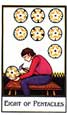
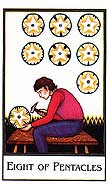 | The top left card represents the first possible outcome. Eight of Pentacles (Prudence): Dedicating yourself fully to a task. Learning a new craft or skill. Applying painstaking attention to detail. Industriousness and the efficient completion of tasks. Sticking with a project long enough to see it through. |
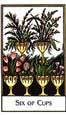
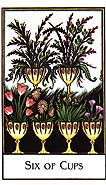 | The top right card represents the second possible outcome. Six of Cups (Pleasure): Opening your heart to the simple pleasures of life. Fond memories fuel the playful embrace of love and life. Experiencing the joy of youth and sexual innocence. Engaging in acts of gentle kindness. Harmony of natural forces without effort or strain. Meeting an old friend. |
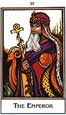
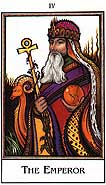 | The middle left card represents the force drawing you towards the first possible outcome. The Emperor: Worldly authority and power. Social mastery and oratory. One who is intelligent, experienced, confident and reasonable. A patriarch or primary male influence. The motive force of politics and society. The ability to fulfill plans and use mental control over the emotions. |
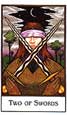
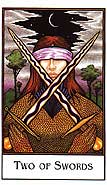 | The middle right card represents the force drawing you towards the second possible outcome. Two of Swords (Peace): Contradictory characteristics brought together as a means of resolving a conflict. Refusing to be ruled by negative emotions. Strife brought to a close through clarity of mind and restraint of force. Turning a blind eye to the minor infractions of others. |
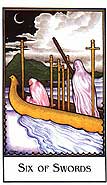 | The bottom card represents the critical factor that decides what will come to pass. Six of Swords (Science): Trusting in intelligence and intuition and setting off into the unknown. Leaving an untenable situation and charting a new course. Passage from difficulty and progress towards a solution. The road to recovery. Travel and exploration. |