Today's Tarot for Rudi Bakhtiar
| The Shadow Truth spread provides insight into your attitudes and hidden feelings. This spread is used when you are having trouble confronting something, or fear that you are concealing something from yourself. The International Icon Tarot renders traditional occult symbolism in Swiss iconography. It is a humorous and direct approach to divination, and one of our favorite new decks. If you would like your own copy of the International Icon Tarot, you can buy it now!
|
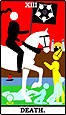
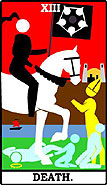 | The card in the center represents the attitude you assume. Death: A major change or transformation, possibly traumatic and unexpected. Freedom from the shackles of the past. A new beginning. Death coupled with rebirth, usually related to consciousness and lifestyle. |
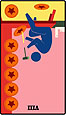
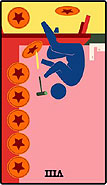 | The card to the right represents the thoughts and feelings that underly your attitudes. Eight of Pentacles (Prudence), when reversed: Undue attention to small details at the expense of the big picture. Losing yourself in your work, to the detriment of your personal and spiritual life. Making the same mistake repeatedly. Refusing to learn new crafts or skills. |
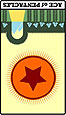
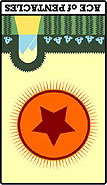 | The card at the top represents how your attitude is evolving and will evolve in the future. Ace of Pentacles, when reversed: The seed of luxury, debauchery, and physical gratification. The seductions of the material world draw you away from an opportunity for stability and comfort. The need to focus on the practical and understand the dynamics of your environment. May represent a gift, document, inheritance, or physical event. |
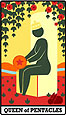
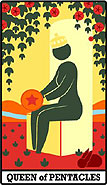 | The card to the left represents how others perceive your attitude. Queen of Pentacles: The essence of earth behaving as water, such as a hot spring: A warm and generous host, providing shelter and comfort for all who would seek it. A person steadfast, practical, and domestic, able to create opulence and stability in any setting. The qualities of maturity and sensibility, coupled with an innate appreciation for nature and the material world. |
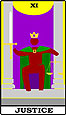
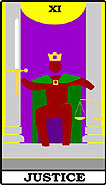 | The card at the bottom represents what you cannot confront or are hiding from yourself. Justice: The achievement of balance and inner harmony after a great trial. Agreements, contracts, or treaties concluded justly. Things set to rights. Karma restored. A turn for the better in legal matters. |
|
|