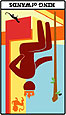
| The Twisting Path spread provides insight into the path ahead of you and the choices you must make. This is the spread for situations where more than one pitfall may lie ahead. The International Icon Tarot renders traditional occult symbolism in Swiss iconography. It is a humorous and direct approach to divination, and one of our favorite new decks. If you would like your own copy of the International Icon Tarot, you can buy it now!
|
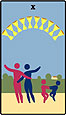
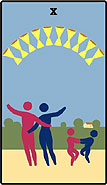 | The card at the lower left, represents the first decision along your path. Ten of Cups (Satiety): Fulfillment and joy in life and love. Feeling peace, tranquility, and contentment in friends and family. Taking delight in one's good fortune. |
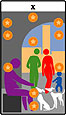
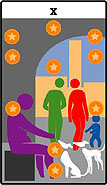 | The card to the far left represents the first false path that may lead you astray. Ten of Pentacles (Wealth): Completion of material prosperity and riches. Freedom from financial anxiety, the security of home, and the enjoyment of family. The passing of inheritance along to children, or the gaining of inheritance from parents. |
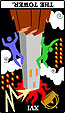
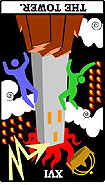 | The card in the middle represents the second decision along your path. The Tower, when reversed: Unexpected upheaval leading to a positive change in life. Catastrophe survived or narrowly avoided. A new lifestyle and enlightenment. May indicate a broken relationship, divorce, or failure in business or career. |
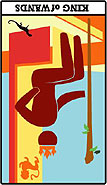 | The card at the lower right represents the second false path that may lead you astray. King of Wands, when reversed: The dark essence of fire behaving as air, such as lightning: An exciting and reckless leader who inspires others to irresponsible acts. An artist whose depraved love of chaos causes him to take hold of destructive ideas and make them appealing to the masses. One who is charismatic and intimidating, using demonstrations of his own skill to dupe others into accepting responsibilities beyond their ability. A dashing and magnetic personality, appearing and disappearing with great suddenness, and leaving upheaval in his wake. |
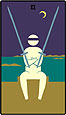
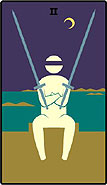 | The card at the top represents one possible mask of your true destination. Two of Swords (Peace): Contradictory characteristics brought together as a means of resolving a conflict. Refusing to be ruled by negative emotions. Strife brought to a close through clarity of mind and restraint of force. Turning a blind eye to the minor infractions of others. |