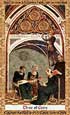
| The Shadow Truth spread provides insight into your attitudes and hidden feelings. This spread is used when you are having trouble confronting something, or fear that you are concealing something from yourself. The Golden Tarot is a modern celebration of late medieval artwork. This deck is the choice of scholars, for it evokes images of elegance amid barbarism, and the light of virtue in dark times. If you would like your own copy of the Golden Tarot, you can buy it now! |
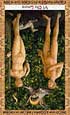
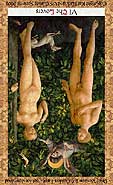 | The card in the center represents the attitude you assume. The Lovers, when reversed: Inner strife, frustration, suspicion, and disagreements in a relationship. Irresponsibility and indecision. Avoiding true intimacy in favor of lust. Unfaithfulness. |
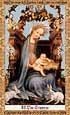
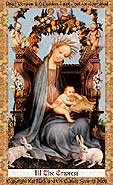 | The card to the right represents the thoughts and feelings that underly your attitudes. The Empress: The essence of femininity and matriarchy. Creativity, productivity, and the foundation of civilization. Initiative and practical actions that promote prosperity, comfort and luxury. Fruitfulness and motherhood. |
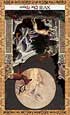
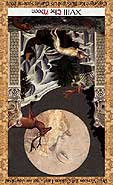 | The card at the top represents how your attitude is evolving and will evolve in the future. The Moon, when reversed: Clarity, control and peace in troublesome times. Increased psychic abilities. Temptations, small problems and minor setbacks overcome. The dawning of a new day. |
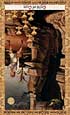
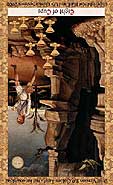 | The card to the left represents how others perceive your attitude. Eight of Cups (Indolence), when reversed: The realization that a matter thought to be important was actually of little consequence. Moving on from something in which you had invested great love and devotion. The start of an inner journey to find higher aspects of life. Reflection on what is truly fulfilling in life. |
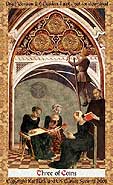 | The card at the bottom represents what you cannot confront or are hiding from yourself. Three of Coins (Works): The commencement of business, commercial transactions, or employment. The constructive use of creative talents, and the expression of artistry in workmanship. Skill and labor turned to the crafting of things of value. Using the conventional as a medium for expressing the exceptional, in order to build something of great renown and glory. |